You can't explain someone into a smart home
My wife's first smart home rules were no phones, no weird-looking switches, and always a manual way to do it. Fifteen years later, one of those rules still stands, and it's the reason the others could change.
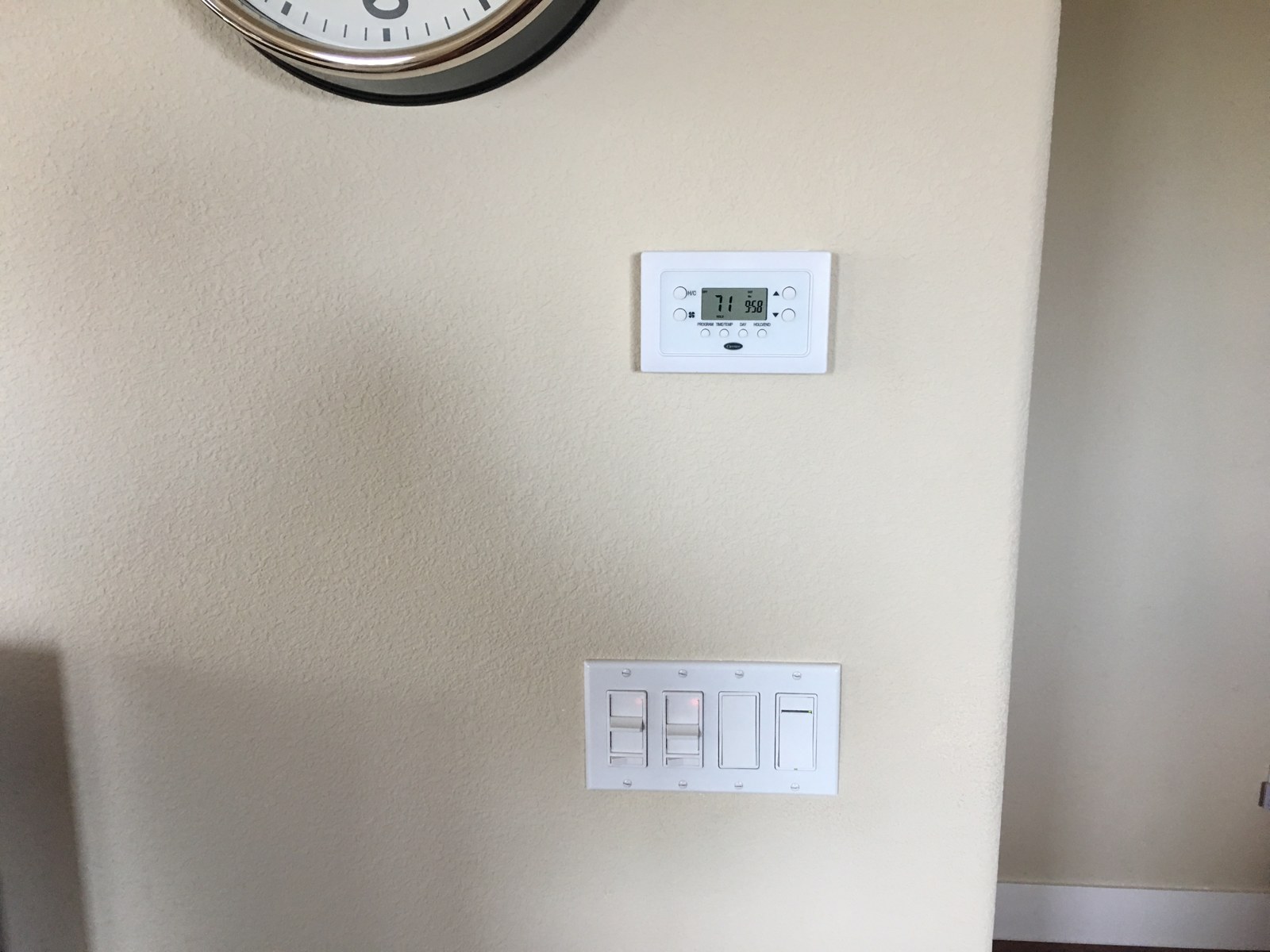
There’s a phrase in this trade that everyone uses and nobody writes down: spousal acceptance factor. It usually gets said with a wink, as if the spouse is an obstacle between the enthusiast and the gear. I’ve never liked it used that way, because in my house the spouse was right about most things, early, and a lot of what I now recommend to clients started as one of her rules.
Where it started
Fifteen to seventeen years ago, smart home devices were mostly seen as the more expensive, more complicated version of something that already worked fine. A light switch that cost five times as much. A thermostat that needed an app. That wasn’t just my wife’s view, it was pretty much everyone’s.
And there were real concerns underneath the skepticism. Privacy. Data. There have been plenty of articles over the years about voice assistants built into microwaves and people getting into home networks through a toaster oven. Some of that is overblown and some of it isn’t, but it’s not unreasonable to be wary of connecting every appliance in your house to the internet.
There was also something harder to name: the idea of the house doing things on its own, without anyone asking it to. That can be unsettling at first. A light that turns on by itself is either convenient or creepy depending entirely on whether you trust the thing doing it.
So my wife had some rules. They were simple, and they were better design principles than a lot of what the industry was shipping at the time:
- She shouldn’t be required to use a phone or a remote to control anything.
- Smart things had to stay aesthetically pleasing. A smart light switch couldn’t look weird, or look different from the regular switches around it.
- There always had to be a manual way to control it, or to override it.
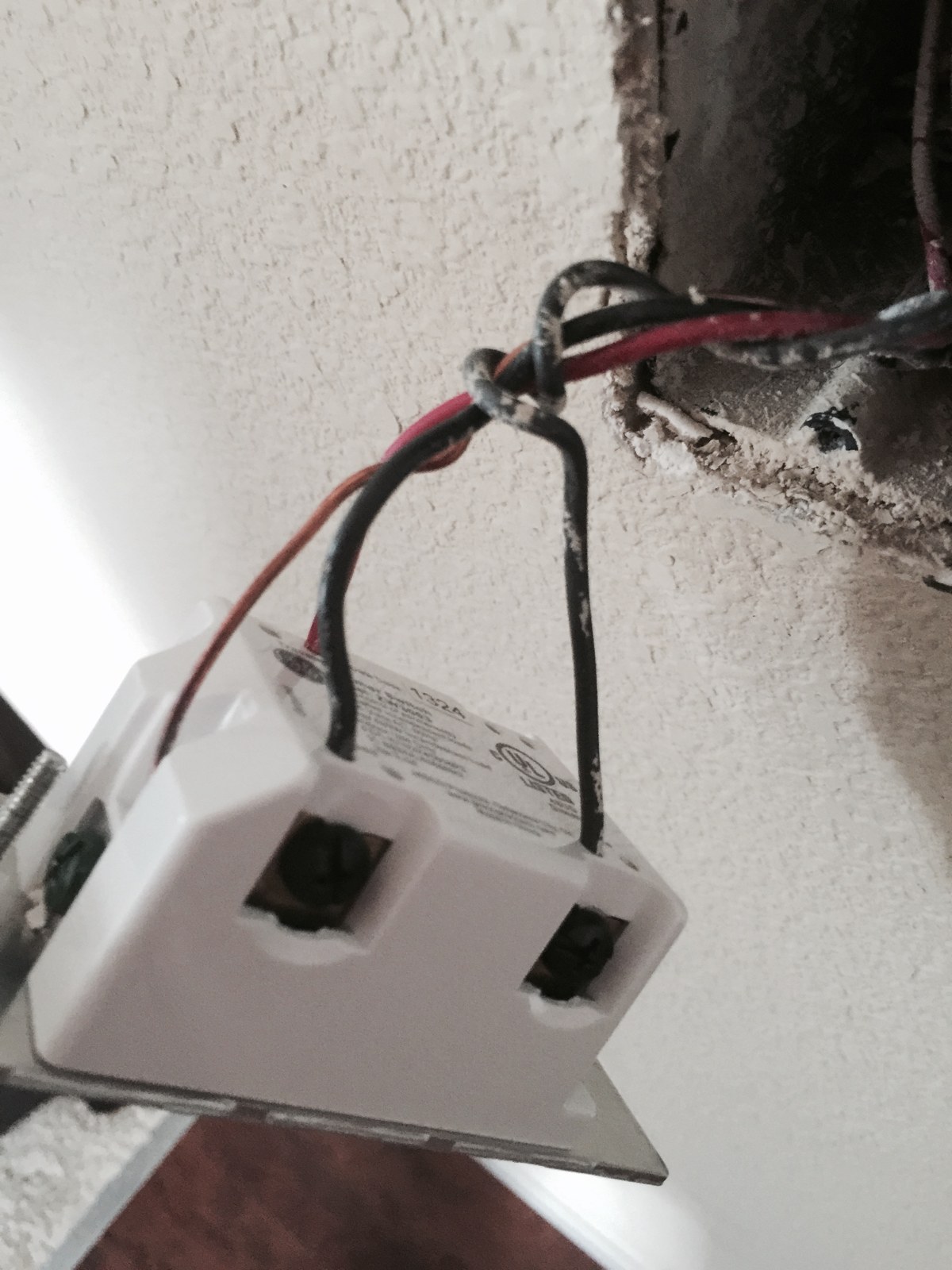
It was fine for the house to be smart, as long as everything could still be done the normal way.
None of this is actually new
Think about the plug-in lamp timer your parents used when they went away on vacation, so the house would look like somebody was home. That’s a smart light switch on a schedule. Nobody ever called a lamp timer creepy.
You already opened your garage door with the push of a button. Now maybe it opens because it sees your car, or because your phone crossed a geofence on the way home. Same garage door, same result, one less button.
People have had motion-sensor floodlights on their driveways for decades. Now the lights can use your cameras to recognize your specific vehicle, and because it knows it’s a friendly car, it can turn on the lights inside the garage and inside the house at the same time. Because it knows it’s you.
Once you see it that way, the smart home stops being a spaceship. It’s the same experiences people already have, with new interfaces into them. The way to get spousal acceptance, or any acceptance, is to automate the things you already do every single day.
You’re still going to hear “we don’t need that” at first. You’re going to hear “I like turning the radio on myself in the morning,” or “it feels weird that something just happens on its own.” That’s normal. This isn’t something you can explain someone into. You have to show it. They have to live with it.
Living with it
Early on, she wasn’t sold. The first automation I ever wrote in our house ran for about 2 months and she thought it was neat, which is what you say about something you’re watching somebody else enjoy. What eventually convinced her wasn’t me explaining it. It was the automation failing, and I’ve written that one up separately.
The other story I tell about living with it involves our guests.
In our previous townhome we had motorized shades. Once the sun went down, they’d close on their own to give us privacy at night. The motors were very quiet, and they moved slowly.
One evening we had two couples over. Dinner, drinks, maybe board games. At some point during the meal, one of our guests glanced over at the windows. The shades had been open. Now they were closed. Nobody had seen it happen.
They freaked out.
And then they thought it was very cool. Cool enough that, when we moved, they took the shades. Literally ours. They had the same size windows and the same floor plan, and they were able to reuse them.
I think about that a lot. The exact same thing that startled them at dinner was the thing they wanted in their own house. The difference was just a few minutes of understanding what they’d seen.
My wife today
That was my wife 15-plus years ago. Here’s my wife today.
We’re on the couch watching a movie, the dog is curled up in her lap, and there’s a reflection on the TV from the under-cabinet light in the kitchen. She pulls out her phone and turns off that one specific light so she doesn’t have to move the dog.
She calls out to our Sonos speaker by voice to start a specific playlist.
We pull out a phone to drop the thermostat a couple of degrees because we’re cozy and nobody wants to get up.
The woman whose first rule was “I shouldn’t have to use a phone to control anything” now reaches for her phone to control things all the time. I don’t think that means she was wrong 15 years ago. I think it means the rule did its job. The phone was never the only way in. Once it became an option instead of a requirement, it turned out to be a pretty good option.
The rules changed as the devices changed, and as we changed with them.
Hiding the hardware
The next stage came from clients, not from my house.
We noticed that once people started using the Alarm.com app inside their homes, they stopped touching their security panel. The families who lived there just didn’t interact with it anymore. The only people who used the panel were guests, dog walkers, house cleaners. For the family, the panel became essentially a chime for notifications and a siren for alarms.
So one day a customer asked me, “Does it have to be by a door? I don’t want to see it.”
I joked, “We can put it in a closet if there’s an outlet.”
That was the first time we installed a security panel in a closet.
Then we started offering the same idea for other things, starting with thermostats.
We’ve gotten used to the thermostat having to be in a specific spot. If you want the main floor comfortable, it needs to be somewhere central and representative of where people actually gather. If you want to be comfortable while you sleep, it really needs to be in the bedroom, not out in the hallway, where all the doors are closed and the hallway temperature can be wildly different from the bedroom on the other side of the door.
The thermostat on the wall was always a compromise. One spot pretending to represent a whole floor, or a hallway pretending to be a bedroom.
Now that some smart thermostats support remote temperature sensors, that compromise goes away. A thermostat is really just a relay that controls your HVAC system. It doesn’t need to be the device that senses the temperature. It just needs the data to act on. So we can leave the thermostat in its old spot, or put it directly on the furnace or air handler. In new construction, it can go anywhere.
The rule that stayed
Hiding the controls does run straight into my wife’s third rule. It’s a trade-off. A panel in a coat closet is technically still manual, but nobody is walking into the closet to change something. The point of hiding it is to show what the smart home can do when the hardware stops dictating where it lives.
In our own house, though, that third rule still stands. There’s always a manual way to do things. What’s changed is that sometimes we’ll look at a switch and ask, “Do we actually need that light switch anymore?”
And the answer, so far, has actually gone the other way. We’ve ended up with more useful switches, not fewer.
When we moved into our current house, there was no under-cabinet lighting in the kitchen. We wanted lights under three separate, non-adjoining sections of cabinets, and to do that without tearing up the kitchen to run a new circuit, we ended up with a light switch at each of the three locations. So to turn on all the under-cabinet lights, you had to find and flip three switches.
With Z-Wave association, I replaced all three with Z-Wave switches and associated them with each other. Now pressing any one of the three turns on all three sets of lights. They can still be controlled separately from the Alarm.com app.
We’ve also added three-way switching in places where there wasn’t any before. With Z-Wave association, you don’t need a traveler wire between the main switch and the secondary switch. It’s all done wirelessly, and nobody has to open a wall.
That under-cabinet light my wife turns off from the couch? It’s still on a switch she can hit by hand, which is exactly what she asked for 15 years ago.
What I tell clients now
If you’re trying to bring someone along, whether it’s your spouse, your parents, or a client who’s nervous about all of it, start with the things they already do every day. Don’t sell them a spaceship. Keep the switches looking like switches. Never take away the manual way.
Then let them live with it. Most people don’t come around because you explained it well. They come around because one night the lights didn’t turn on, or the shades closed during dinner, or the dog was asleep on their lap and they didn’t want to get up.
In our house, the best rules came from the person least excited about the technology.