Wire is the most flexible thing you can put in a wall
Three jobs where the wire was already in the wall, put in for something else. On each theater job, reusing it saved the customer about $4,800 in labor, and nobody had to patch drywall.
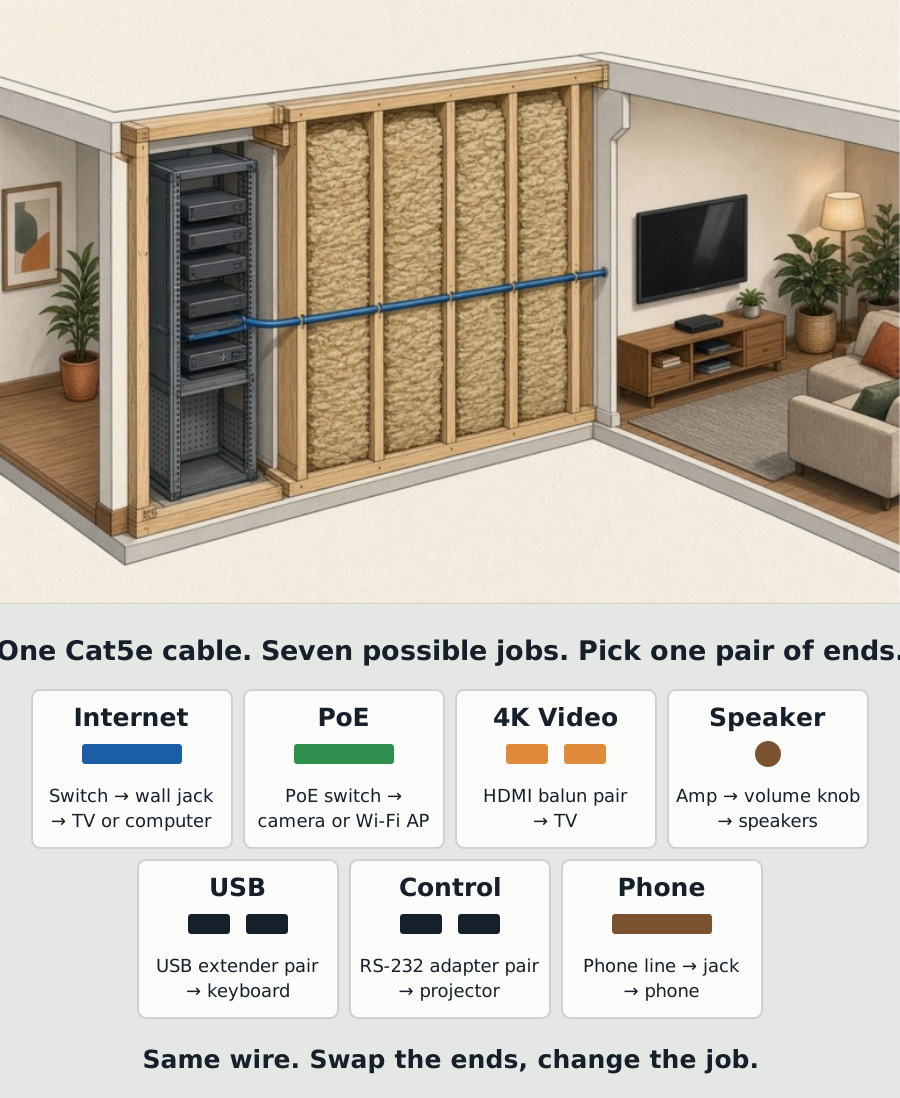
We’ve done drywall work at Bright Wire, but we try hard not to. We aren’t drywall professionals, and we aren’t painters. It’s the same problem electricians and plumbers have: if we cut a hole, we can’t always patch it back to invisible. When we do have to open a wall, we put up strapping and set the drywall pieces back so the repair is easier. But we’d rather not cut at all.
So when there’s an existing run we can reuse, we reuse it. It saves the customer money, it saves us time, and it leaves no holes in the house.
I made the cost argument for wire in the builder post: the cable is cheapest before the drywall goes up.
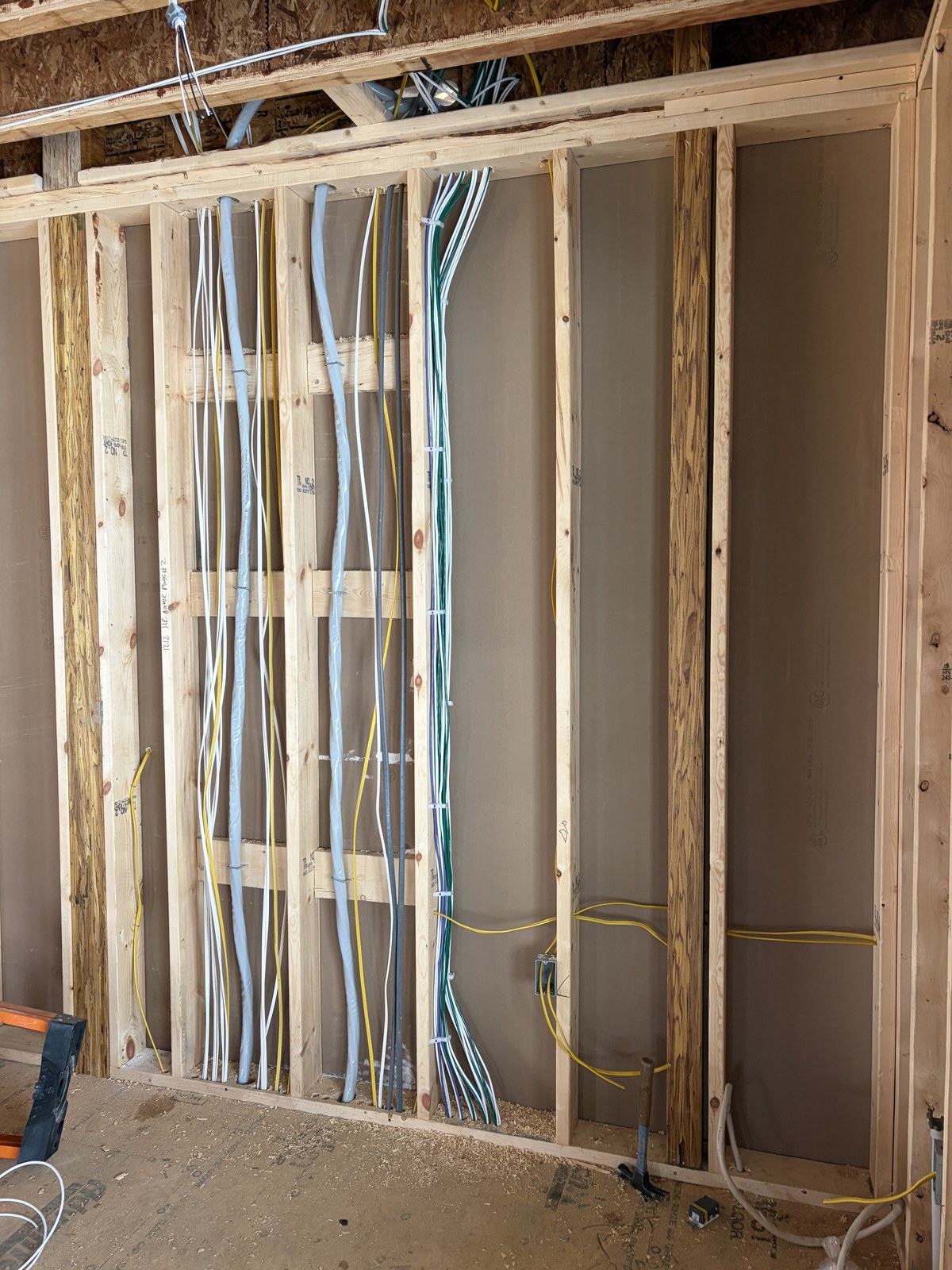
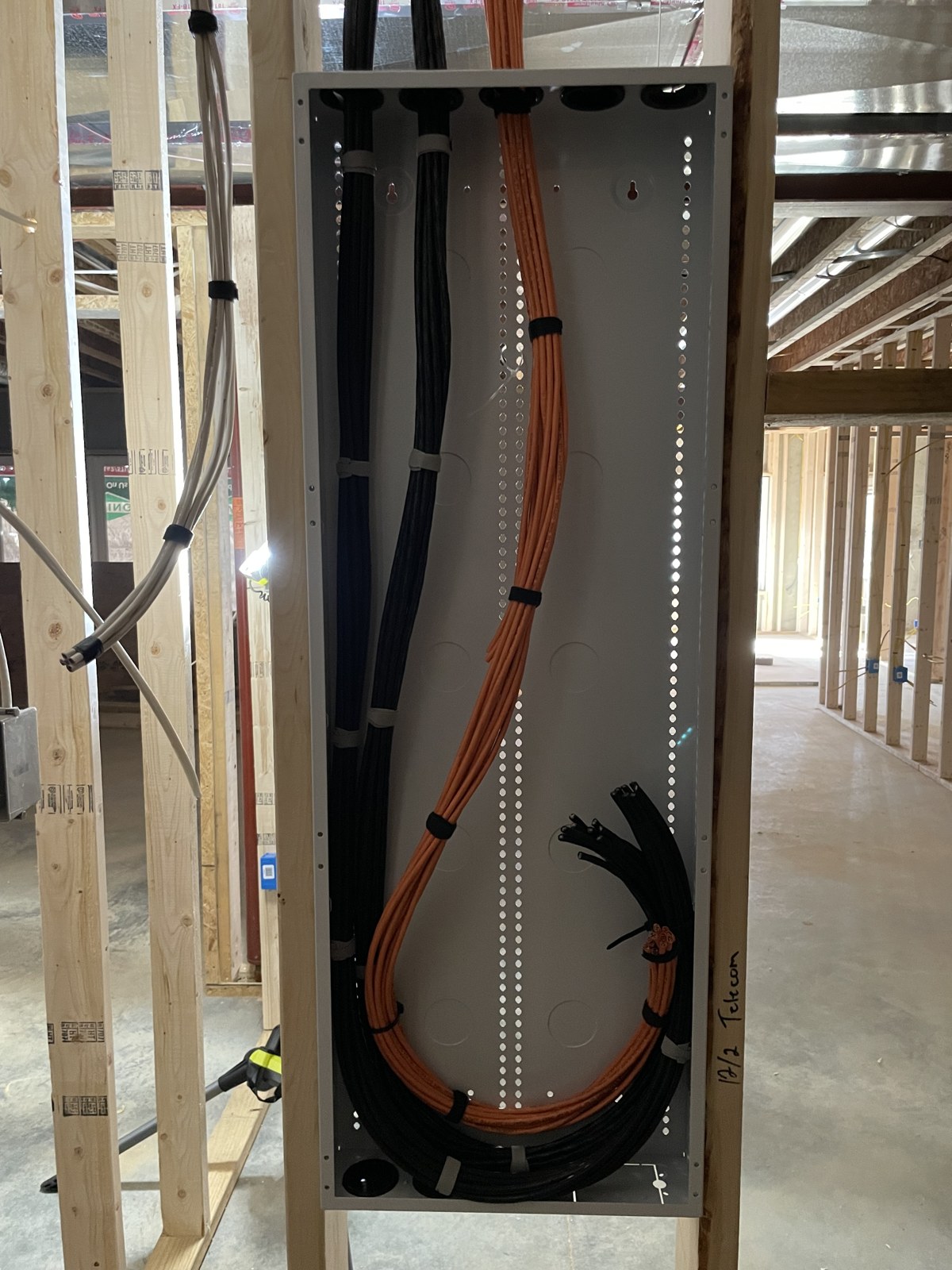
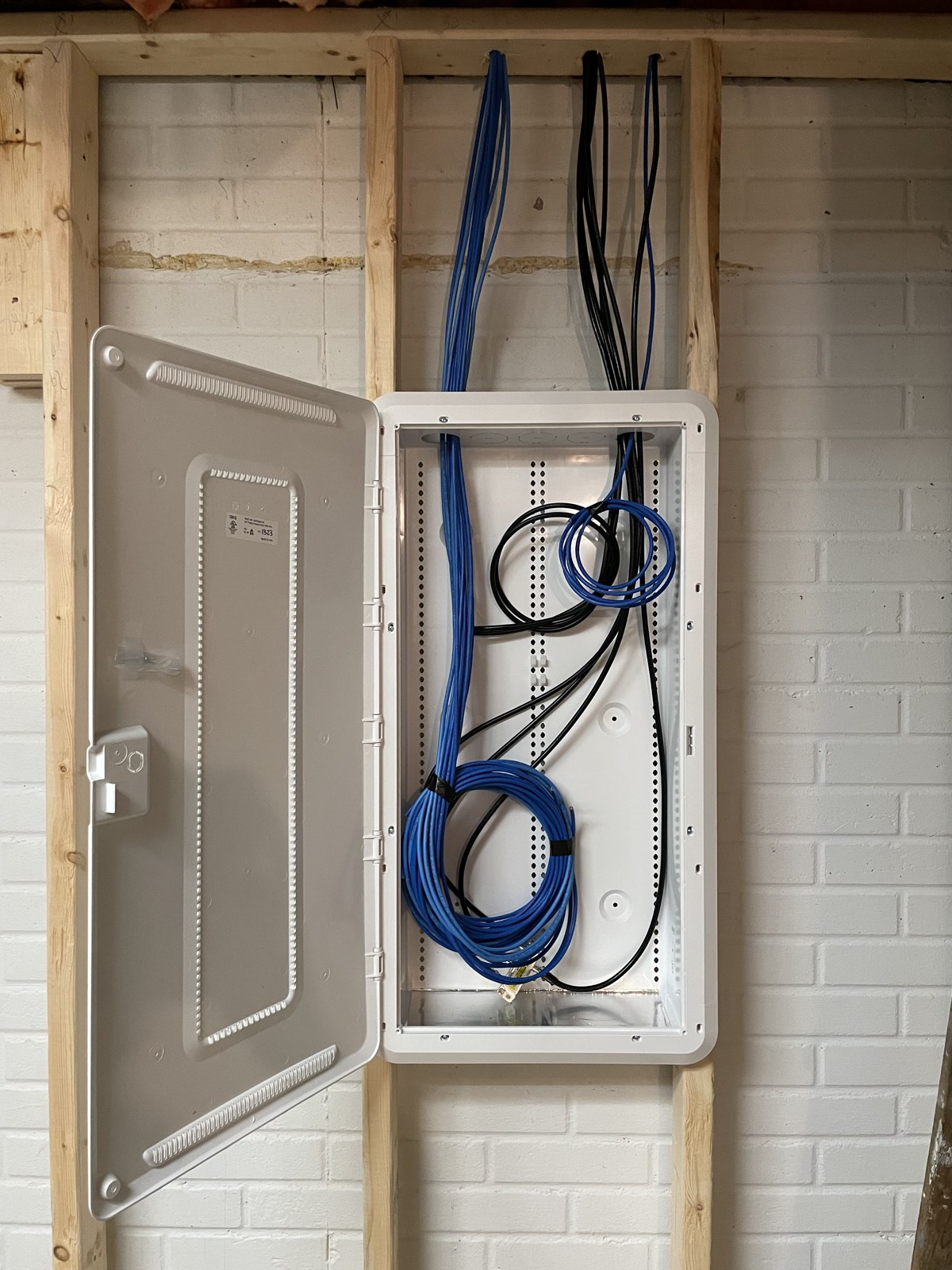
These are three jobs where the wire was already there, put in for something else.
A volume knob on an old computer line
The house was about 30 years old. At some point, someone had run Cat5e from a patch panel in the basement up to the kitchen, for the family computer. That was back when the computer lived in one central spot in the kitchen. The customer didn’t need that data jack anymore.
The house had also been built with an intercom system: ceiling speakers throughout, and you could play a cassette tape to the whole house. The intercom’s speaker wires all ran back to its brain, and that wiring landed in the basement too. So the old kitchen Cat5e and the old intercom speaker runs met in the same place.
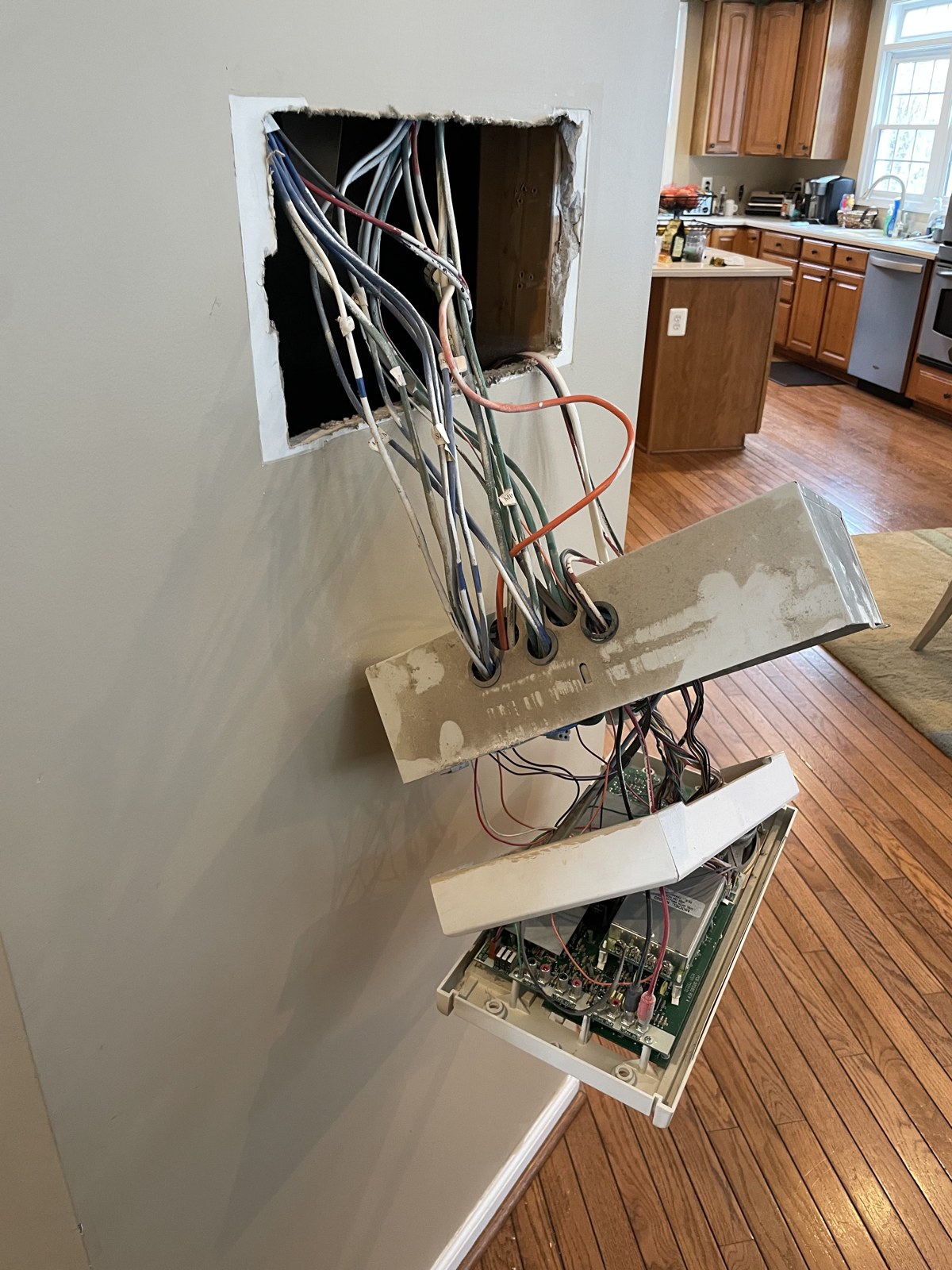
We used that Cat5e to add a speaker volume knob in the kitchen, where there had never been one. It’s stereo, so it uses all four pairs in the cable. The amplifier sits in the basement. Two pairs carry left and right up to the knob in the kitchen. The knob turns them down, and the other two pairs carry left and right back down to the basement, where the old intercom wire to the kitchen ceiling speakers starts. We swapped in new ceiling speakers and kept the old intercom wire.
In new construction, you’d run from the volume knob straight up into the ceiling to the speaker. The round trip only makes sense because we were reusing wire that was already there. The alternative was probably a full day of labor and holes in the drywall to fish new runs. It was a win-win.
Two reuses in one theater
This was the nicest home theater we’ve been in, but it was 15 to 20 years old. Nothing in the walls had been put in for a modern digital signal. The only digital cable was one Cat5e.
The original projector got its picture over the old analog video runs, the ones that end in RCA or BNC connectors. We reused those to carry audio to two new ceiling speakers for Dolby Atmos. The room was built before Atmos came out.
The Cat5e had run to the old projector, with an RS232 adapter on the end that an old Savant system used to control it. We put HDMI baluns, a sender and a receiver that carry HDMI over network cable, on both ends of that Cat5e and sent a 4K HDR signal over it, about 50 feet from the theater back to the original equipment closet. A new run would have needed a fiber-optic HDMI cable, about $150, on top of the labor.
A subwoofer cable that used to be cable TV
In another theater, the customer wanted more in-wall subwoofers. The rack was too far away for a wireless subwoofer kit, and we avoid wireless whenever we can.
The house had coax running from the rack out to a splitter that sent cable TV around the house. The customer had dropped cable for YouTube TV, so that coax wasn’t doing anything. We put F connectors on both ends of one run and used it as the subwoofer cable. Cable-TV coax is shielded, and it works fine for a subwoofer signal, even though it isn’t what you’d normally buy for one.
What it saved
On those theater jobs, fishing fresh runs would have taken two technicians two full days, whether it was the subwoofer cable, the speaker wire or the HDMI. That’s 16 hours each, 32 hours total. At $150 an hour, that’s about $4,800 in labor on each job, and that’s the customer’s money.