Our best work and our smartest work aren't the same thing
I once spent most of a day running one wire to one camera. Today I'd be done in under an hour, and it's the smarter job.
There’s a difference between the best work we’ve ever done and the smartest work we’ve ever done.
In early 2022 we took on a retrofit camera job. The house was about 7 years old, finished and lived-in. When it was built, the original low-voltage company had run PoE cable for the cameras, and that was a gift. It meant swapping the old cameras for current Alarm.com PoE cameras was easy. For the extra cameras we were adding, I wanted to match that. I wanted to keep everything hardwired and on PoE, the same quality that was already in the walls.
One of those cameras went up in the eave facing the driveway, about 10 feet above the garage door. Getting a wire there in a finished house meant starting in the unfinished basement, going up through the ceiling of a finished garage, into the attic above the garage, across the attic, and out to the eave. I’d estimated it as about a 2-hour wire run.
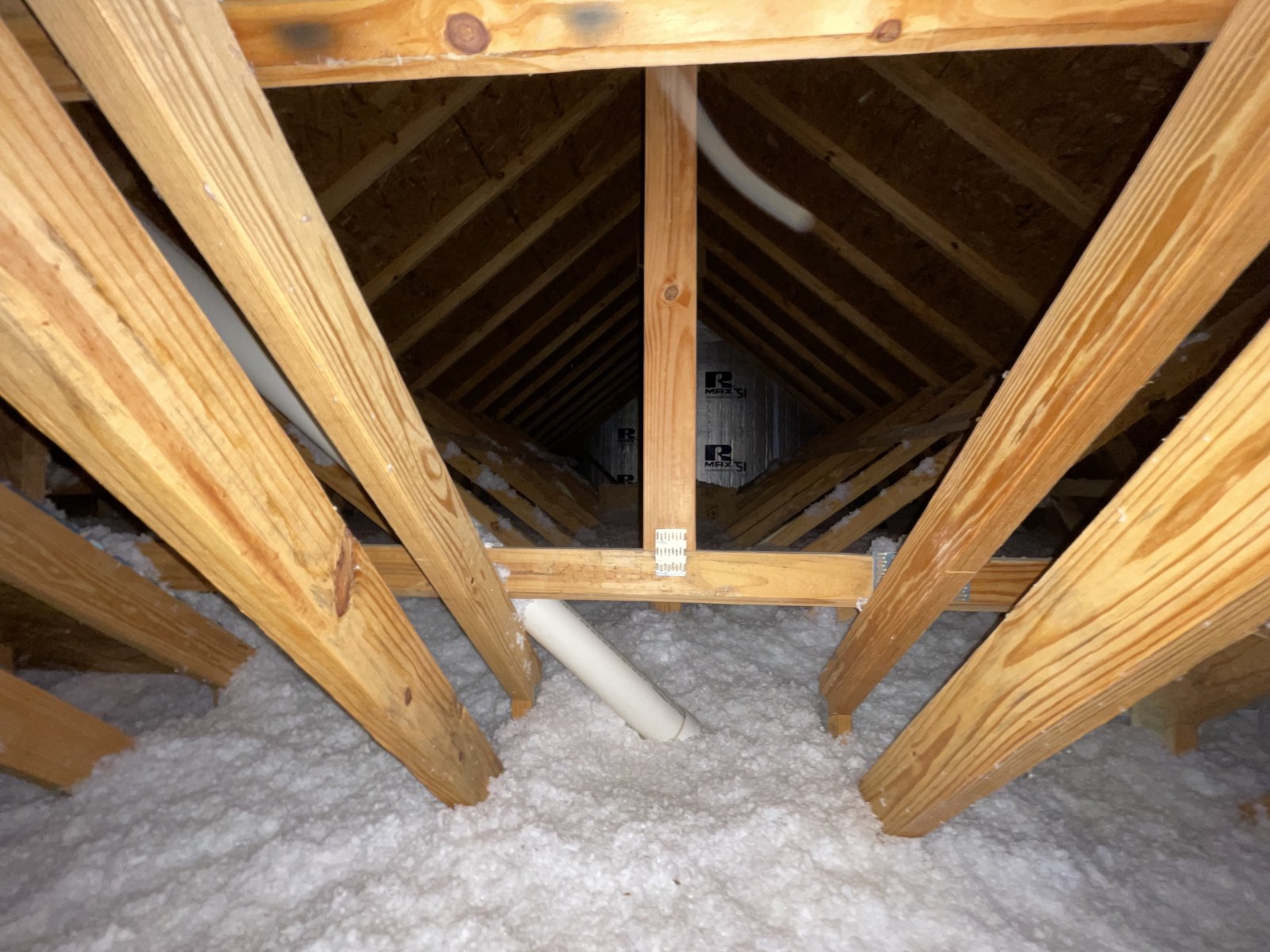
It took 6 to 8 hours. One technician, most of a day, for one wire.
We did it right. That run has worked flawlessly for almost 5 years. If you want to see our best work, it’s a cable you’ll never see, buried in a wall of a house that will probably never have a problem with it. I’m proud of it.
But it wasn’t our smartest work.
What the hard way actually cost
We hold to our pricing. Our site walks are rigorous. We spend an hour or two walking the house before we ever quote it, and we don’t charge for that, because the whole point is to know where the wire runs, where things mount, and where the studs and joists and rafters are before we show up. That’s how the price stays accurate, so when we give a number, we hold to it. In the entire history of the company, there have been maybe two times we’ve gone back to a client to adjust a quote.
This was not one of them. I’d quoted it at 2 hours. Our labor rate then was $100 an hour, so I billed $200 for that camera, and we ate the other 4 to 6 hours. We lost real money on that run.
Now play it the other way. If I’d quoted the real 6 to 8 hours of labor, the wire alone would have been $600 to $800 at our rate then, or $900 or more at our rate today, before the camera even went up. The client would have said no. Of course they would have. Nobody pays that to hardwire a single camera when there’s another way to do it. And there was another way.
The smart version
Today I’d install that exact camera with a Wi-Fi-to-PoE bridge. It plugs into a wall outlet, joins the Wi-Fi network as a client, and gives you a PoE output to run a PoE camera from.
For that eave, the nearest outlet was in the garage right below it. I’d plug the bridge in next to the garage door opener on the front wall, drill one hole straight out through the garage wall, run a short Cat6 patch cable through it, weatherproof the hole, and mount the camera. Under an hour, start to finish.
Same camera. Same spot. Six to eight hours of my best work, or under an hour of my smartest work.
When the wire still wins
I’m not telling you to stop running cable. I’ve written before that wire is the most flexible thing you can put in a wall, and I meant it. In new construction, copper is almost always the right call. The bridge only works if the Wi-Fi is actually strong where the camera’s going. In this case it was, because we’d just replaced that client’s 7-year-old ceiling access points. The originals were older and slower, and by then we were installing N and AC. The network could carry it.
But in a finished home, where the goal is no cut holes and no drilling inside walls, the hard way gets expensive fast, and there are diminishing returns. There’s a time and a place for everything.
What actually changed
What I learned on that job was about how I quote work. The hard way was invisible to the customer. They’d never see the wire, never know it took most of a day, and never understand why one number might be $200 and another $800.
So now I lead with what I’d do personally and professionally, and then I lay the trade-offs out plainly, with the prices attached, and I let the client choose. A $300 camera install against $900 or more in labor for the wire alone isn’t a small gap. People will give up a lot to save that $600: some camera performance, some video or audio quality, a slower connection where the camera sits. Cost is king. My job is to show them what they can’t see.
The best work we ever did on that house is a wire nobody will ever look at. The smartest work would have been handing the client the real choice in the first place.