Imagineering at home: I'm becoming the Black Pearl
My son is going as Jack Sparrow for Halloween, so I'm going as his ship: a wearable Black Pearl with eight cannons that flash, smoke and glow, and a ghost ship mode.
Becoming a Walt Disney Imagineer has been my dream job since I was a kid. My first trip to Disney World was in third grade, and Pirates of the Caribbean was one of my absolute favorite rides: the animatronics, the water ride, the full immersion into the life of a pirate.
Disney is in my blood. Everyone knows I love Disney. Disney World was the first place I ever traveled with my then-fiancée, now my wife. For the last 3 years we’ve taken the family there and shared the magic it gave me as a kid.
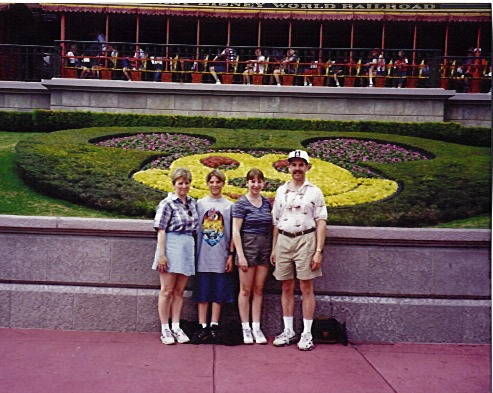
I was so excited when my son said he wanted to be Captain Jack Sparrow for Halloween this year. I’m not going as a pirate. I’m going as the ship.
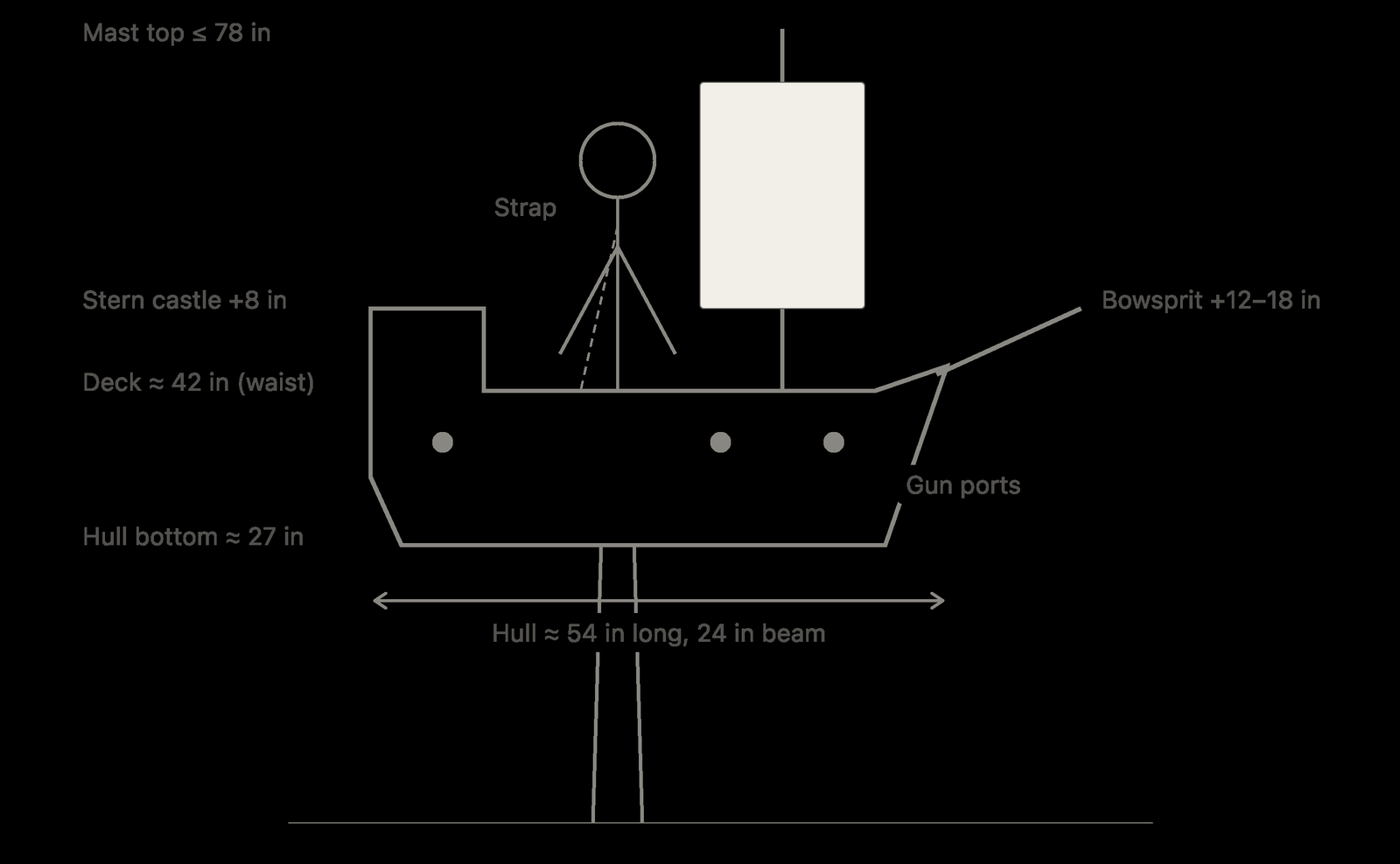
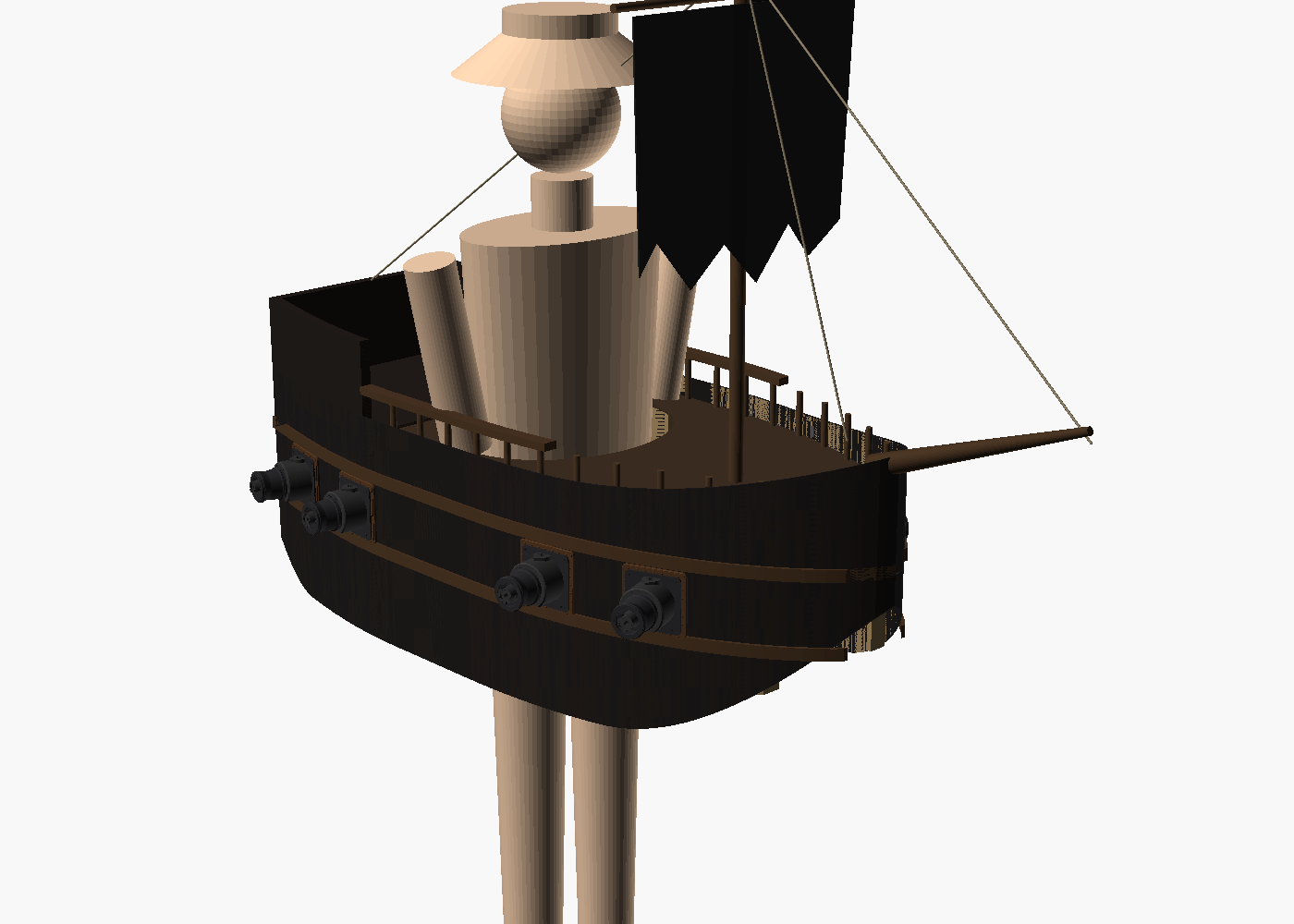
I’m building the Black Pearl. A wearable one: a cardboard hull on shoulder straps, so I wear the whole ship and he sails along beside me. It’s the part of the job I don’t get to do on a paid install. Pure Imagineering, in my own garage, for an audience of one.
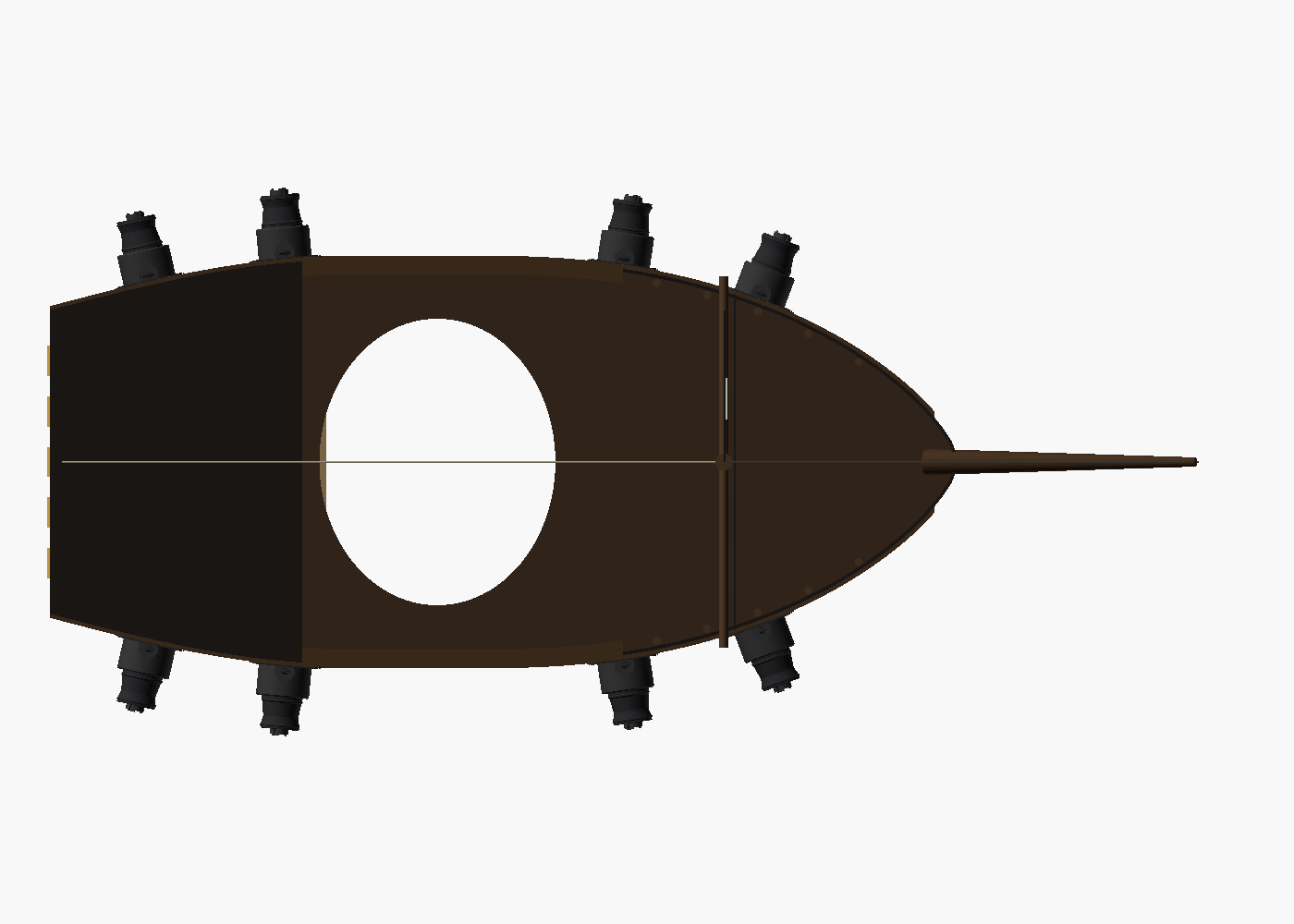
The cannons
There are eight 3D-printed cannons, four down each side of the hull.
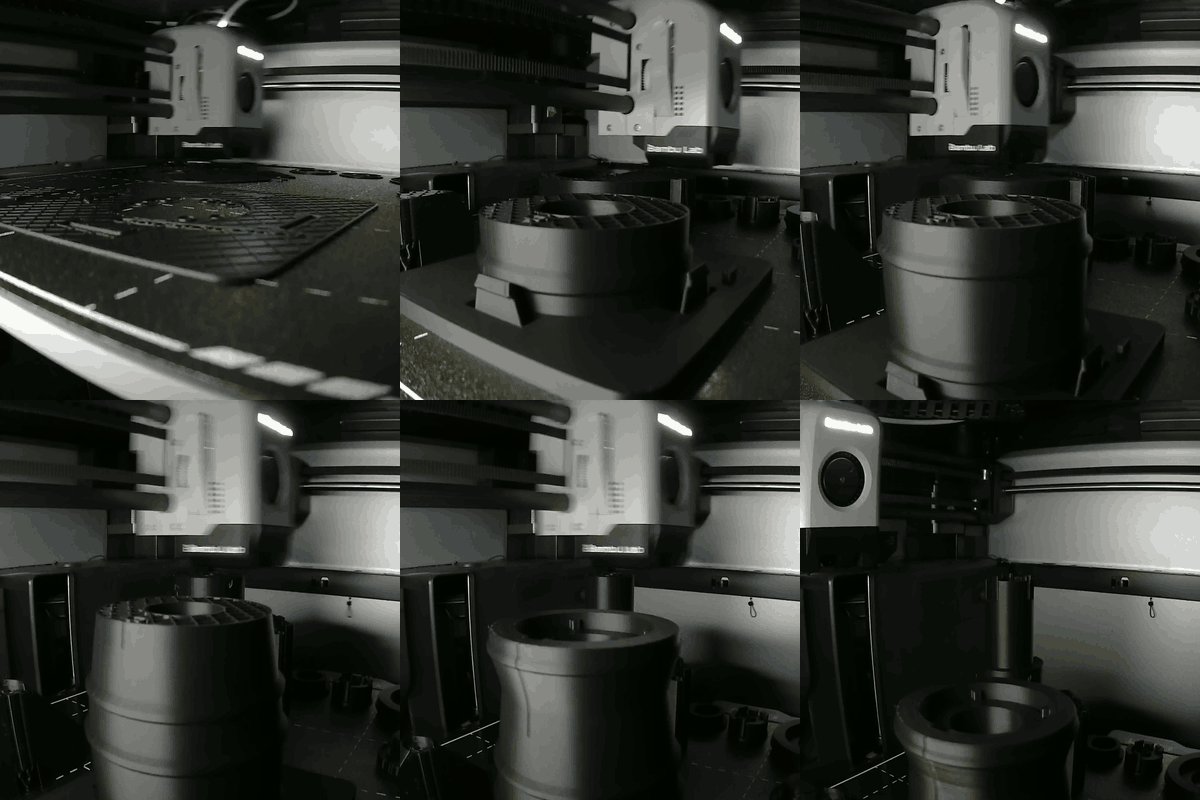
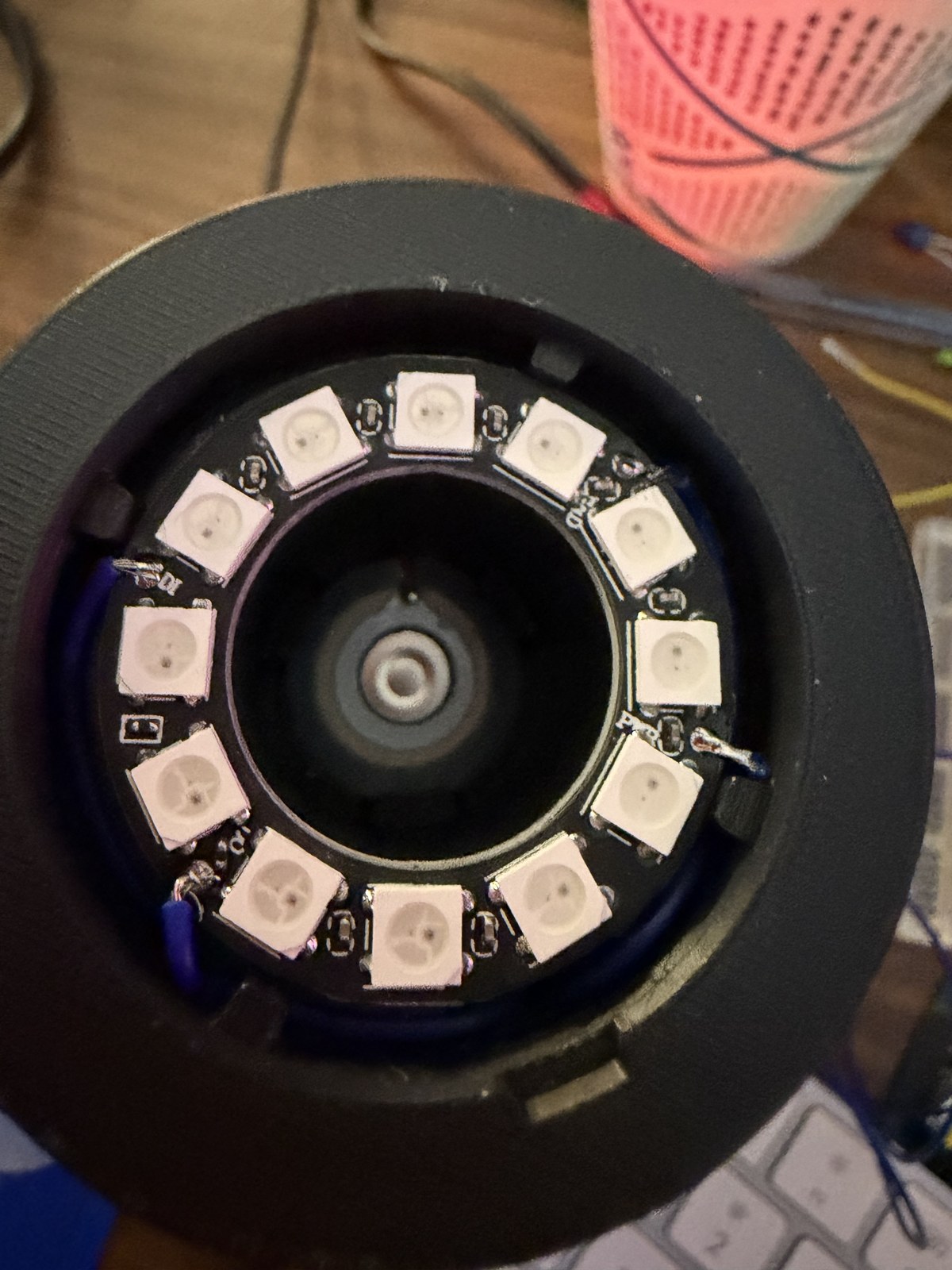
Each one has a WS2812 LED ring in the muzzle. It’s addressable RGB, so every cannon can do its own thing. A single cannon firing runs a little sequence I’m proud of.
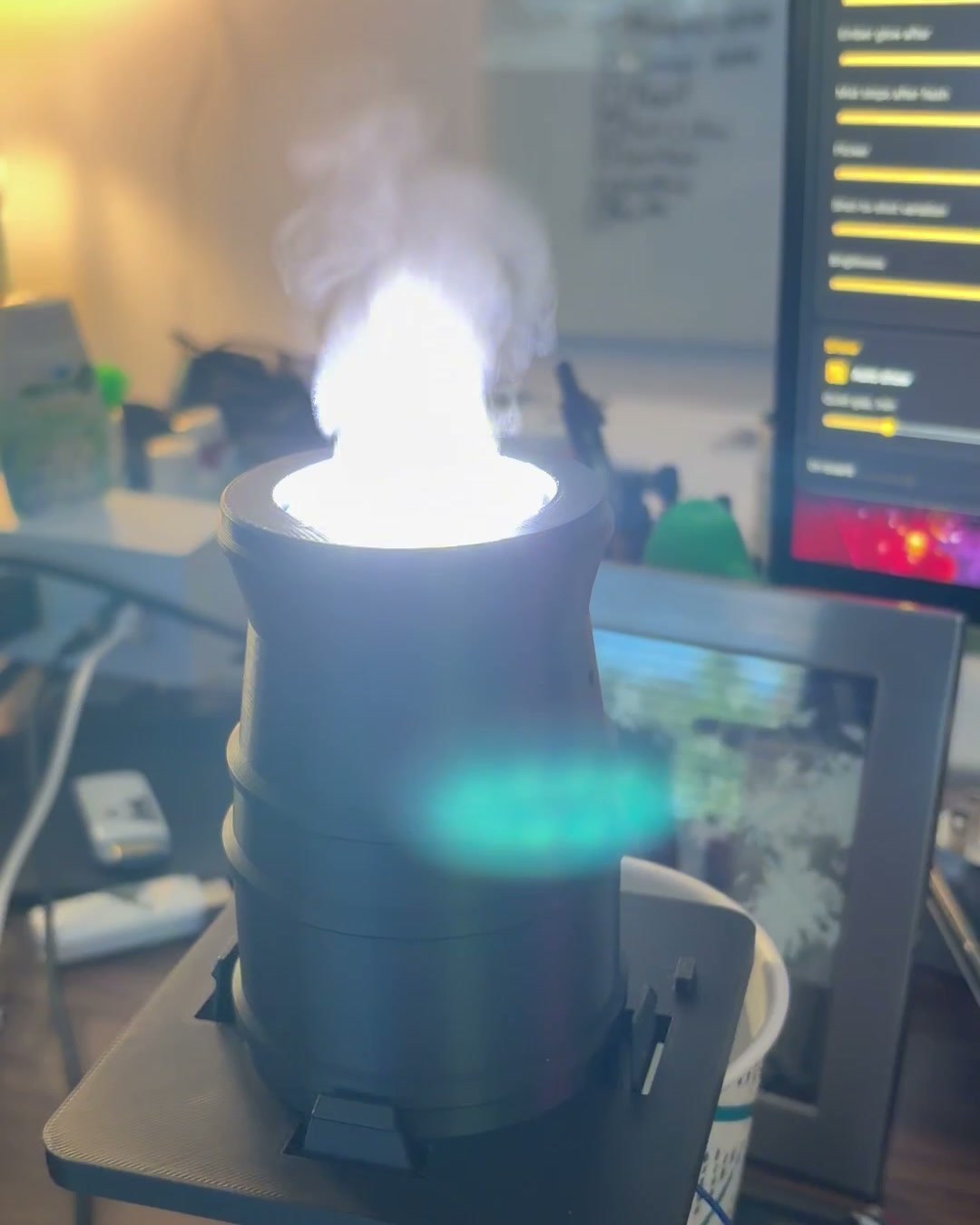
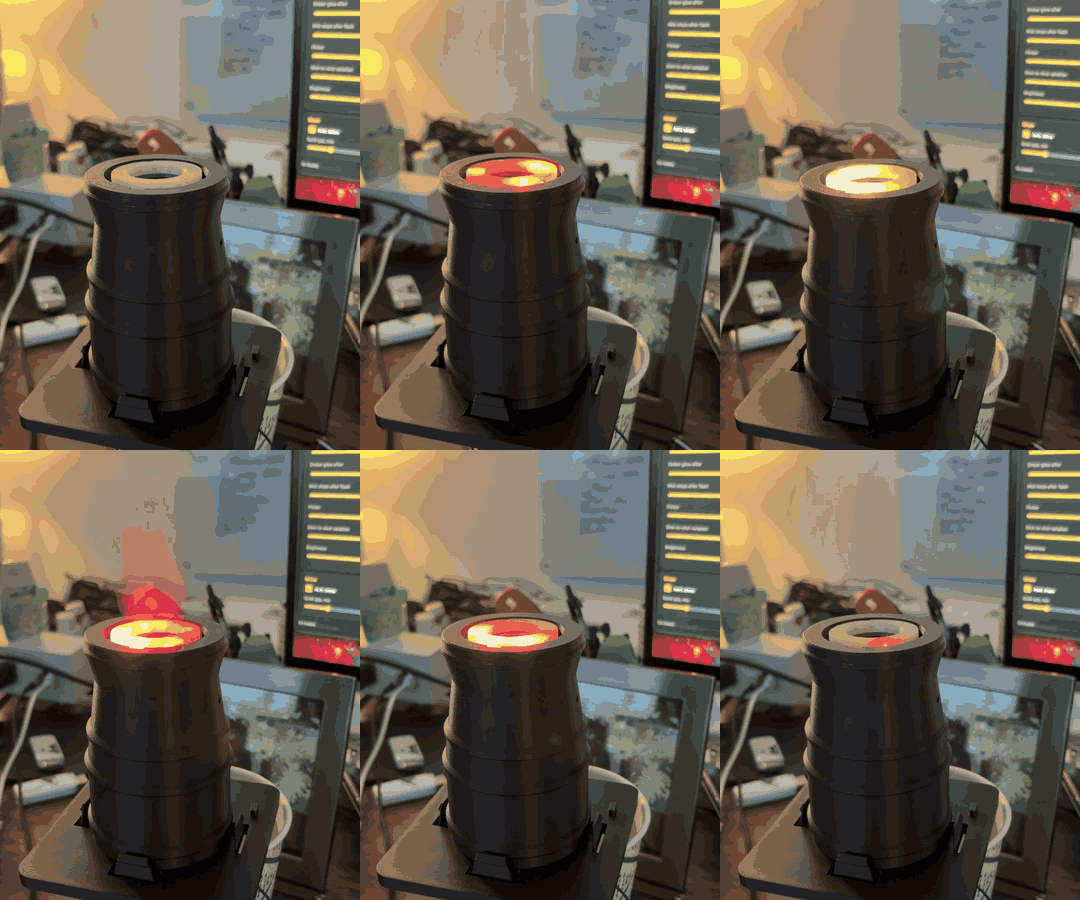
First the fuse “lights”: the ring crackles in orange and yellow, flickering like a lit fuse burning down. It builds until the whole ring is a solid orange glow. Then it snaps to a bright white flash, and that flash is the moment the smoke comes out, for about a second and a half. Then the white settles into a hot red-and-orange glow, and the embers fade away around the ring until it’s dark again. Fuse, flash, smoke, embers.
Then there’s the smoke. Each cannon is fully self-contained. It has its own water reservoir holding about 40 milliliters, enough to keep the wick wet for a couple hours of trick-or-treating, and its own ultrasonic atomizer disc sitting about an inch and a half behind the LED ring, up inside the barrel. The disc comes out of a cheap humidifier atomizer kit. Everything around it I’m building.
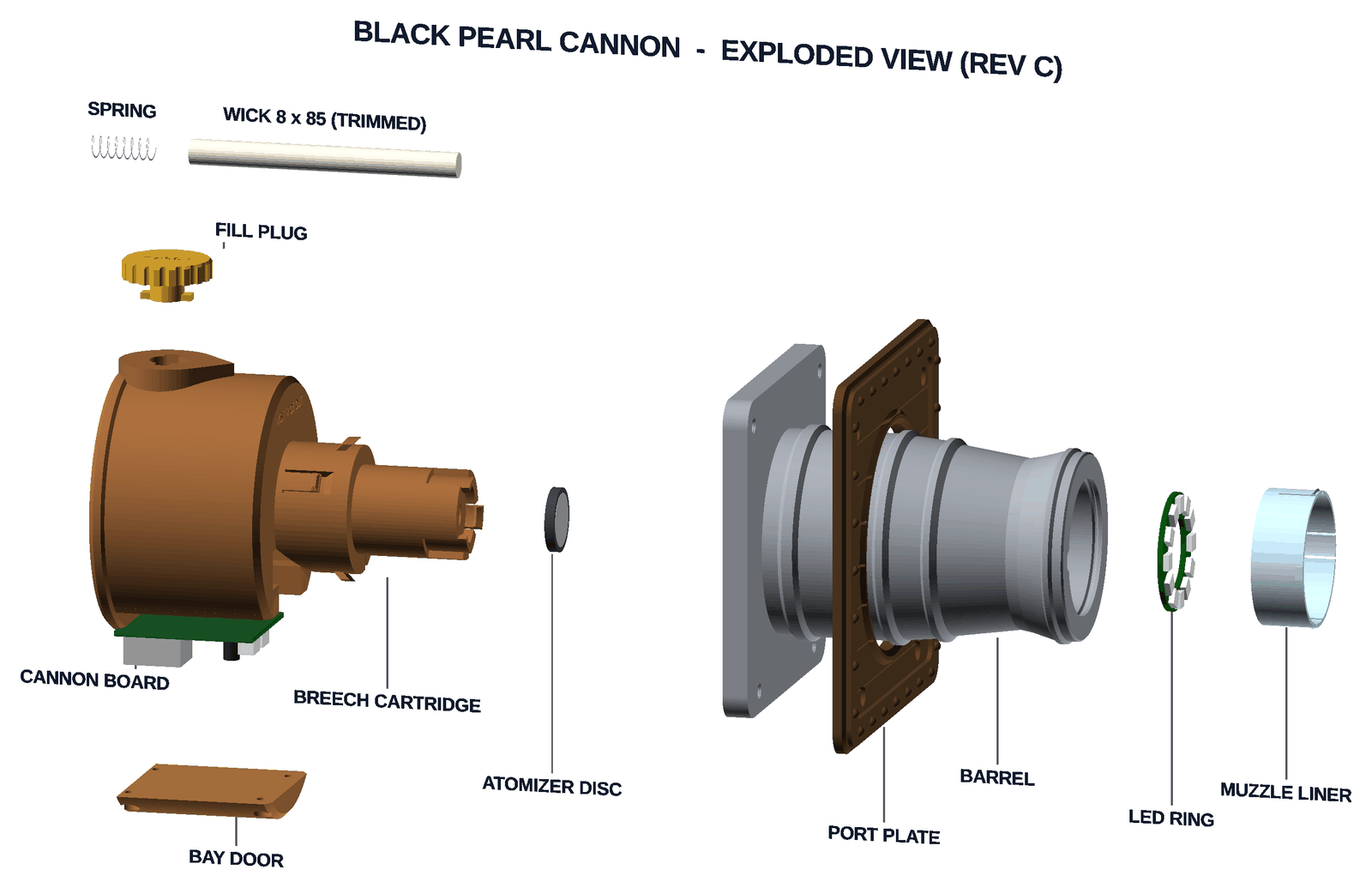
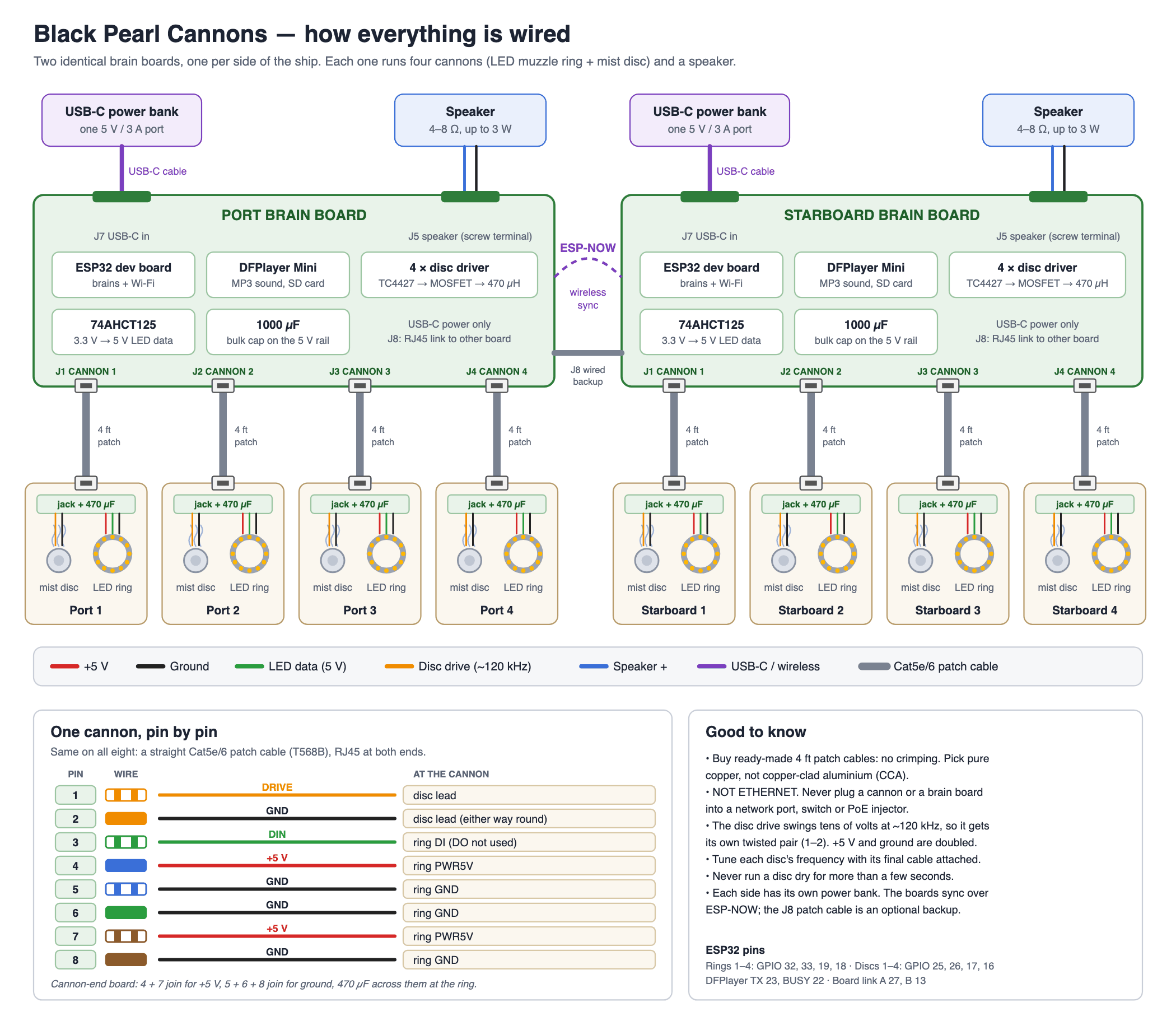
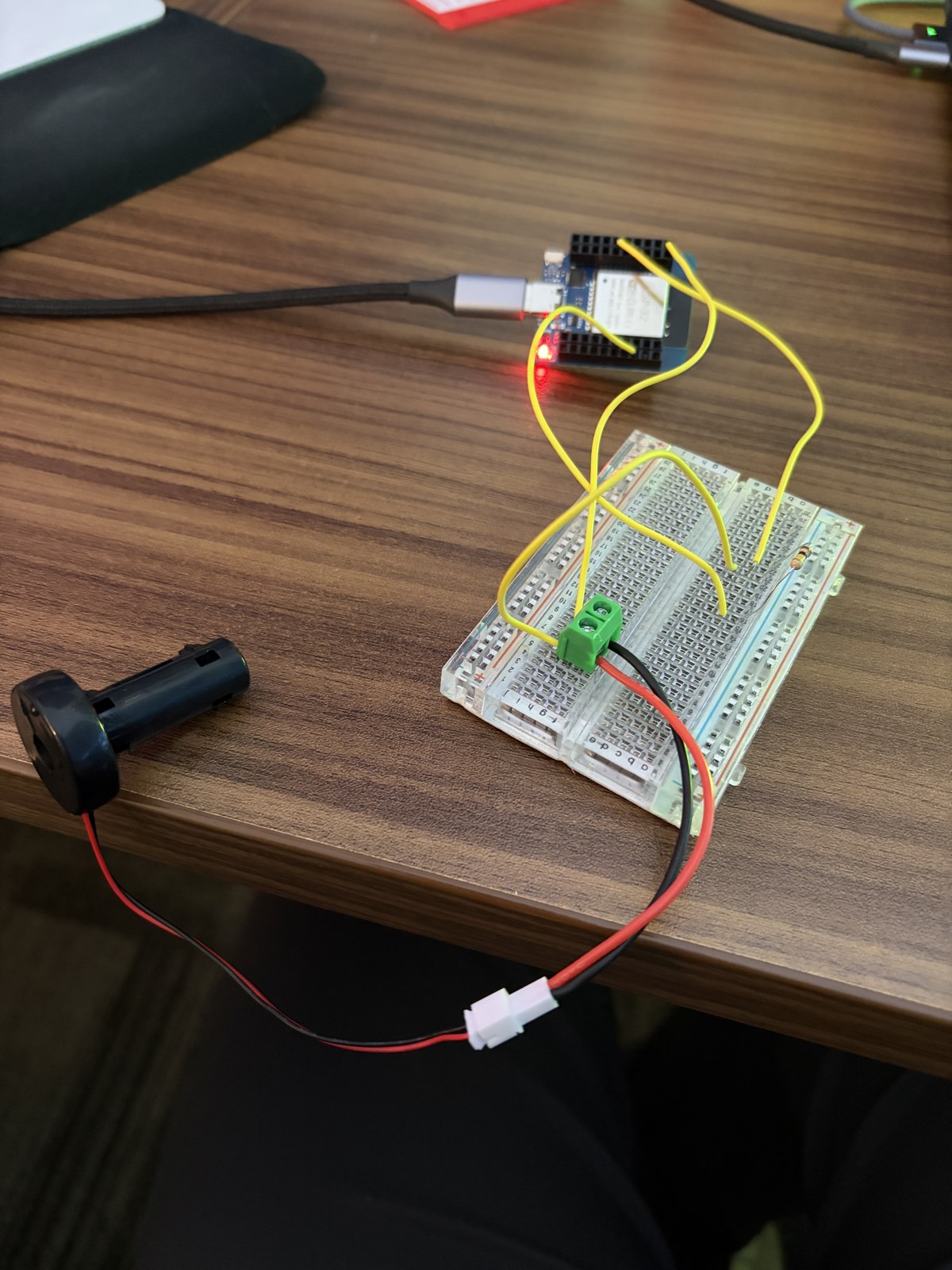
Each cannon needs five signals: two for the mister, and three for the LED ring (power, ground and data). They run over an ordinary Cat5e patch cable with RJ45 plugs on both ends. The mister drive swings tens of volts at about 120 kHz, so it gets a twisted pair to itself, and the spare conductors double up the power and ground. That makes the cannons easy to fire independently, and easy to swap if one gets crushed on a driveway. It isn’t Ethernet, though, and the boards say NOT ETHERNET next to the jacks so nobody plugs a cannon into a network switch.
Two brains, one for each side
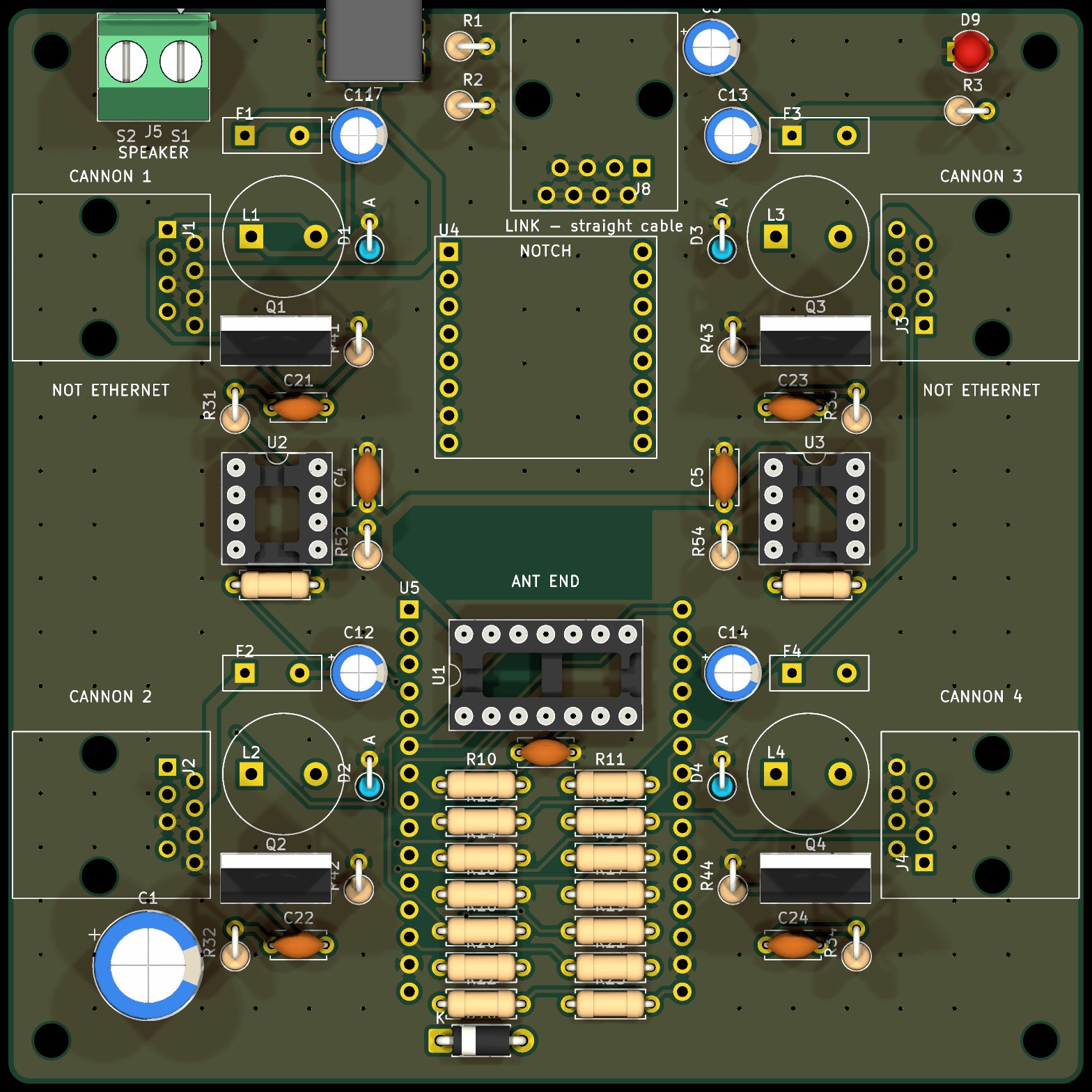
The brains are two boards I designed myself, one for port and one for starboard. Each one takes an ESP32 dev board in female headers, a DFRobot DFPlayer Mini for sound, and the drivers for four cannons. Each side runs off its own USB-C power bank, and the two sides talk to each other wirelessly over ESP-NOW. So instead of a rat’s nest of modules hot-glued to the inside of the hull, each side is one board doing light, mist and audio.
I’ve ordered both brain boards from JLCPCB, along with a small RJ45 breakout board for each cannon.
It has an app, because of course it does
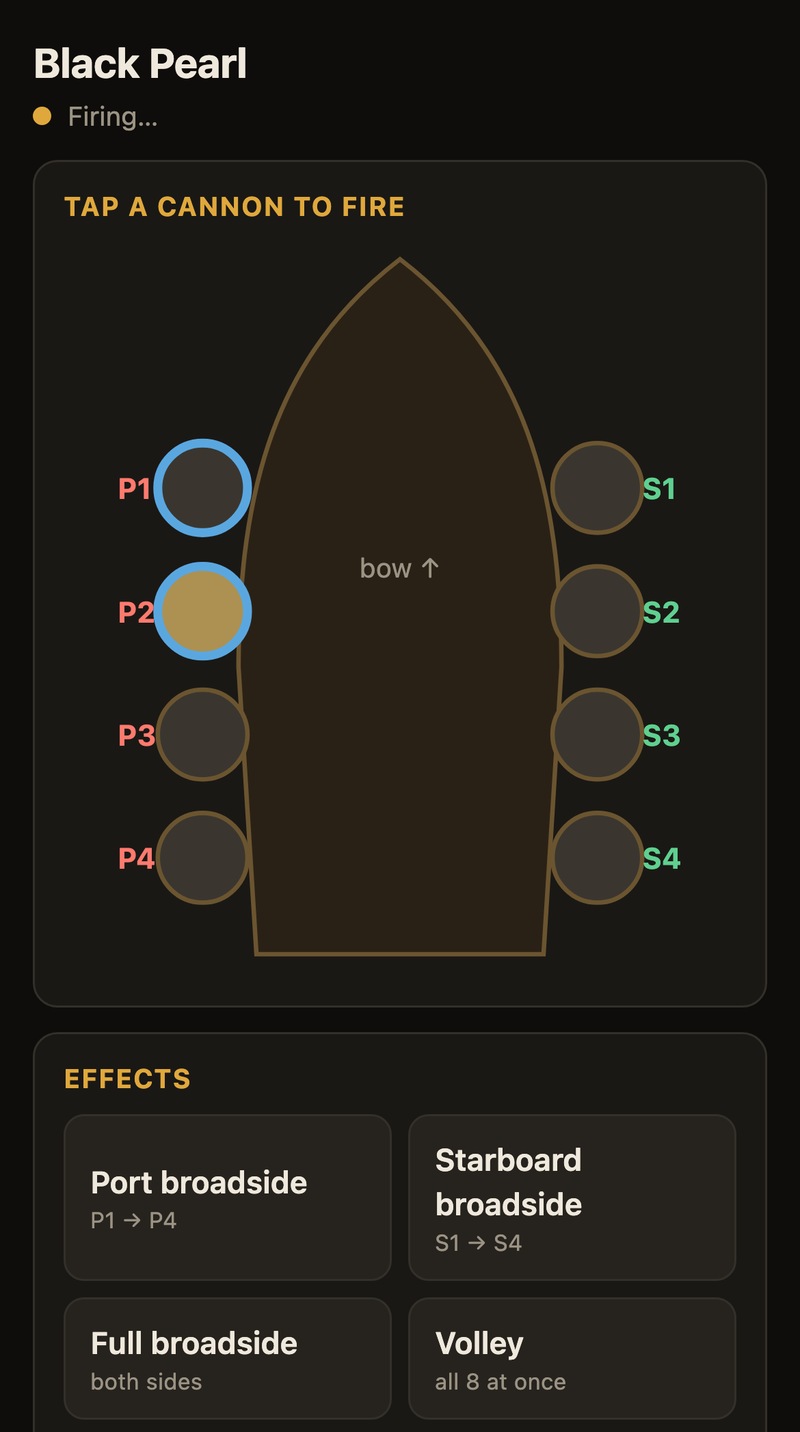
I built an app to control the cannons. I can fire one cannon, fire a whole side as a broadside, or fire all eight at once in a volley. Or I set it to run an automated show and just let it go off on its own while I hand out candy.
There will be sound, too, though it isn’t working yet. One speaker per side, driven by the DFPlayer. Cannon booms when they fire. And underneath it all, an ambient bed of a ship creaking on the water, with a certain famous line about dead men and the tales they don’t tell dropping in between shots. Every clip will be free and royalty-free, and that famous line will be a re-recorded royalty-free soundbite, not the movie audio.
Ghost ship mode
This is the one I can’t wait to see on a dark street. In ghost ship mode, every cannon ring stops being fire and goes cold. The LEDs flicker and glow in aqua green and dark blue, slow and creepy, like the Pearl rising up out of the water. And instead of sharp cannon puffs, the misters breathe out gently at different rates, so a low fog pools around the whole hull.
What’s left
The boards are on order. When they arrive, they get built up and the sound goes in. If I get all of that done and working, the stretch goal is some lighting on the outside of the ship to make the hull read better at night.
Halloween is the deadline that doesn’t move. If a cannon’s misfiring on the 30th, that’s a problem for the 30th. Either way, he’s getting his ship. I’ll post photos after.
And if anyone at Walt Disney Imagineering is reading this: I’d love to build the real thing.