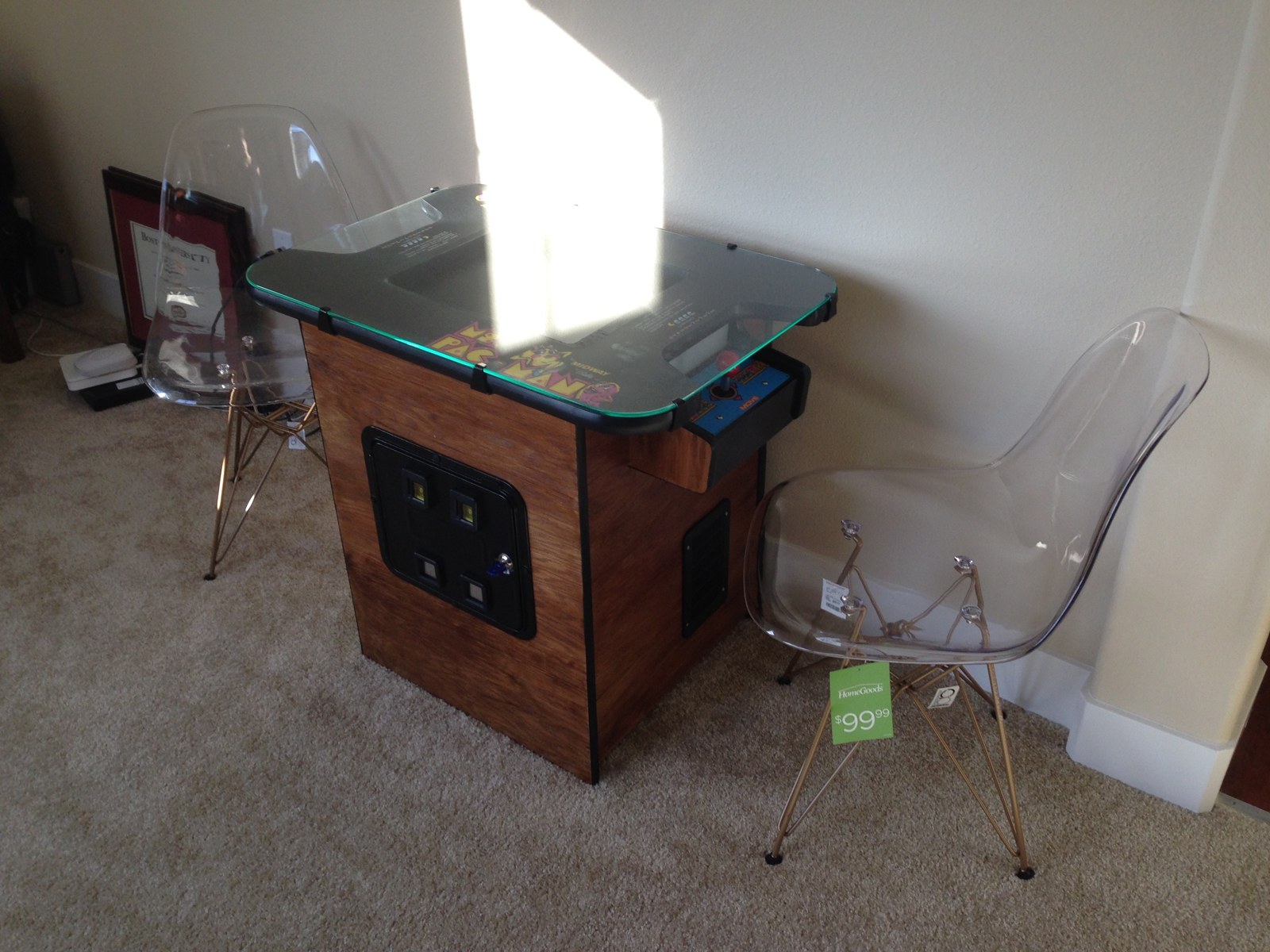
I built my wife a Ms. Pac-Man table for our anniversary
Before there was a table, there was a pile of wiring on the floor. It all came in under $500.
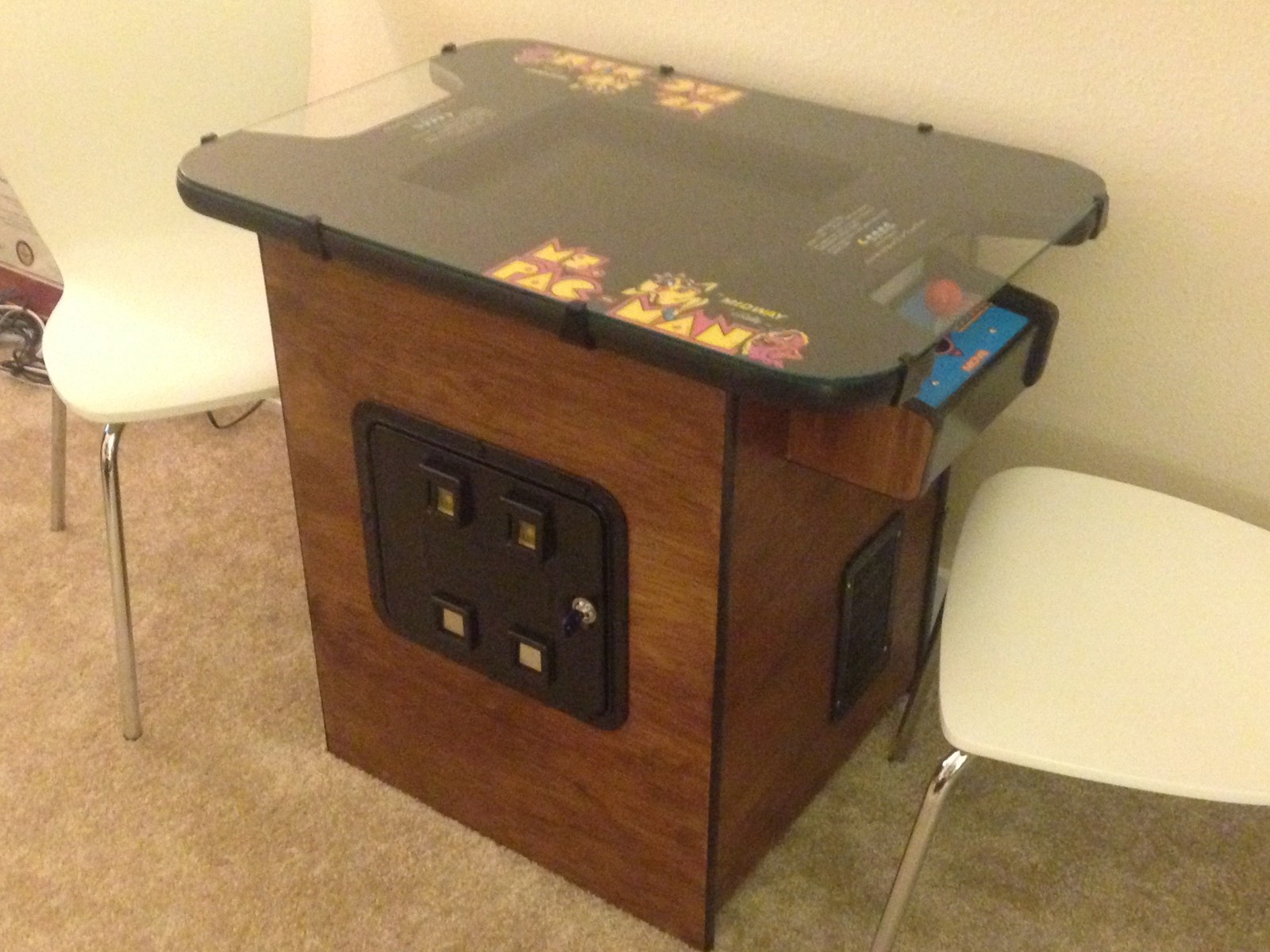
When my wife was a kid, her friend had a Ms. Pac-Man cocktail table in the playroom over the garage. That’s where she played Ms. Pac-Man.
So for our third anniversary, in 2014, I built her one. From scratch, and a total surprise. It’s still in our house.
What a cocktail arcade table is
It’s the sit-down kind of arcade game. The screen faces up under glass, and you play from either end, across the table from each other.
Mine runs a multi-game board on a 19-inch LCD. The whole thing came in under $500.
Keeping it a secret
All the parts shipped to my office instead of the house, so no boxes of arcade parts ever showed up at home. The glass top alone came in a box big enough to give the whole thing away.
Then I built the cabinet in the garage over a single weekend while she was away.
The real thing, mostly
I wasn’t building a lookalike. I found an old service manual from Midway, the company that made the original cocktail tables, and built to its dimensions. I bought new old stock parts from a few eBay sellers and retro arcade shops, like the graphic underlay that sits under the glass, on top of the screen surround.
Where I stopped was the electronics. Chasing a working original Midway board, and the speakers that went with it, would have been a gamble. So the cabinet’s dimensions and the underlay are as close to the original as I could get, and the guts are a mix of new old stock and new parts I knew would work.
Wires everywhere
It started as a pile of wires on the floor. I hooked up the harness, the control panel and the screen down there first.
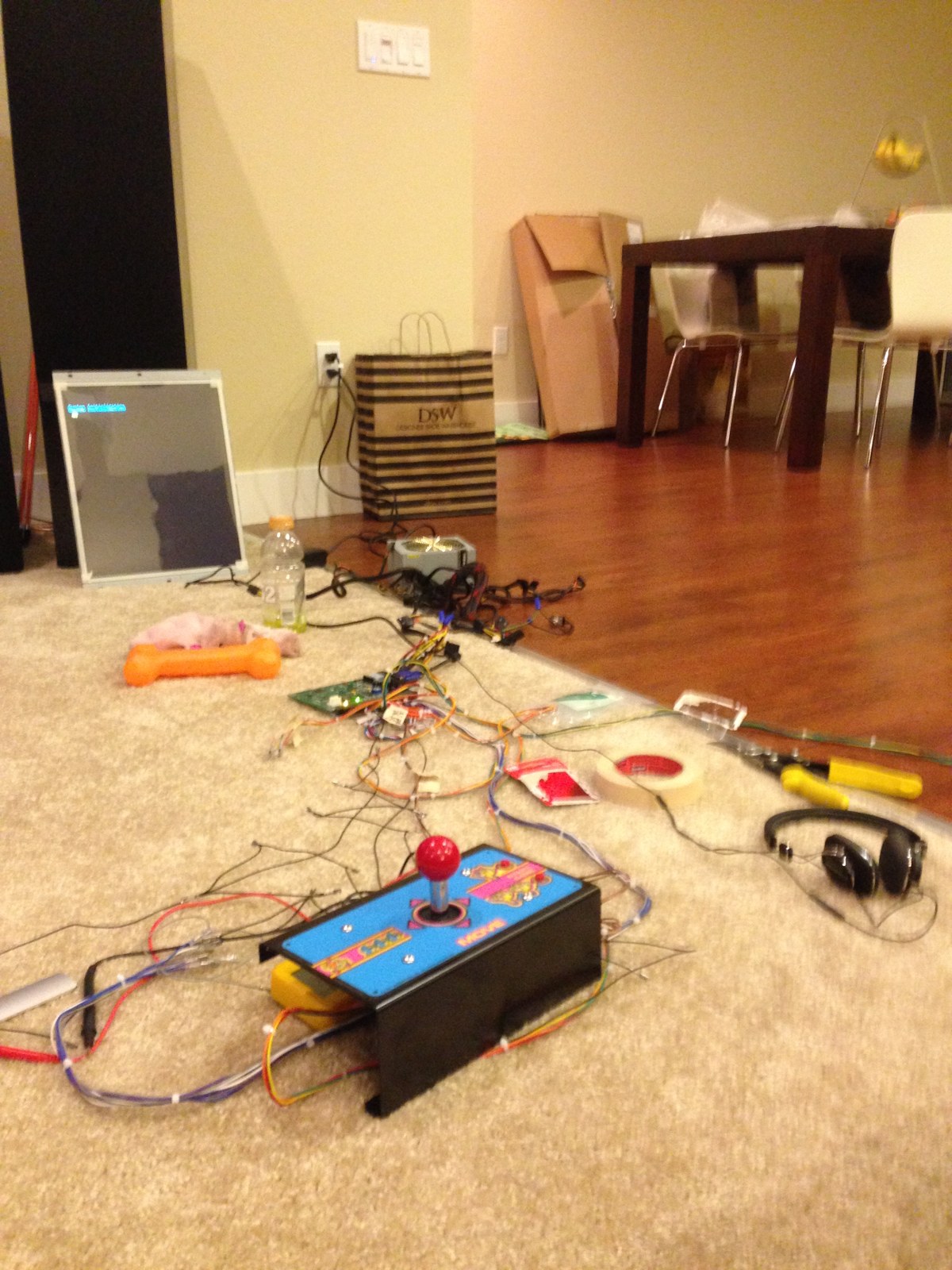
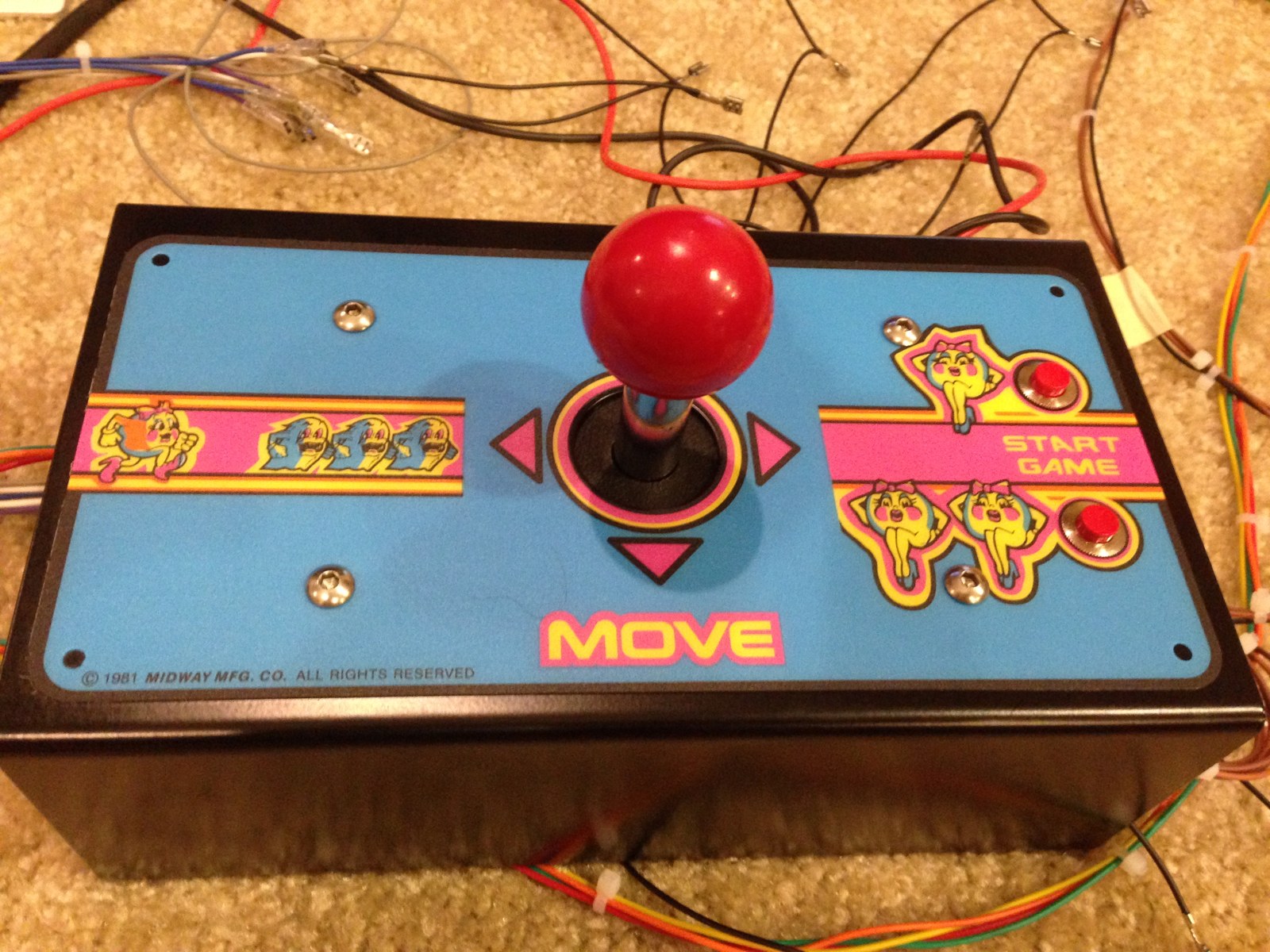
The wiring was the hardest part of the whole build, because of the multi-game board. Nothing went wrong. It was just hard. The board’s manual was mostly in Chinese, and this was long before you could ask an AI to translate it. So it was guess and check.
The board came loaded with extras: splash screens, screensavers, button combinations that switch to other games. I wanted all of it off. The table had to boot straight to Ms. Pac-Man and play nothing else. That mattered more to me than anything else in the build. I did it with a mix of DIP switches and the board’s on-screen service menus. No USB, no serial port, just button presses.
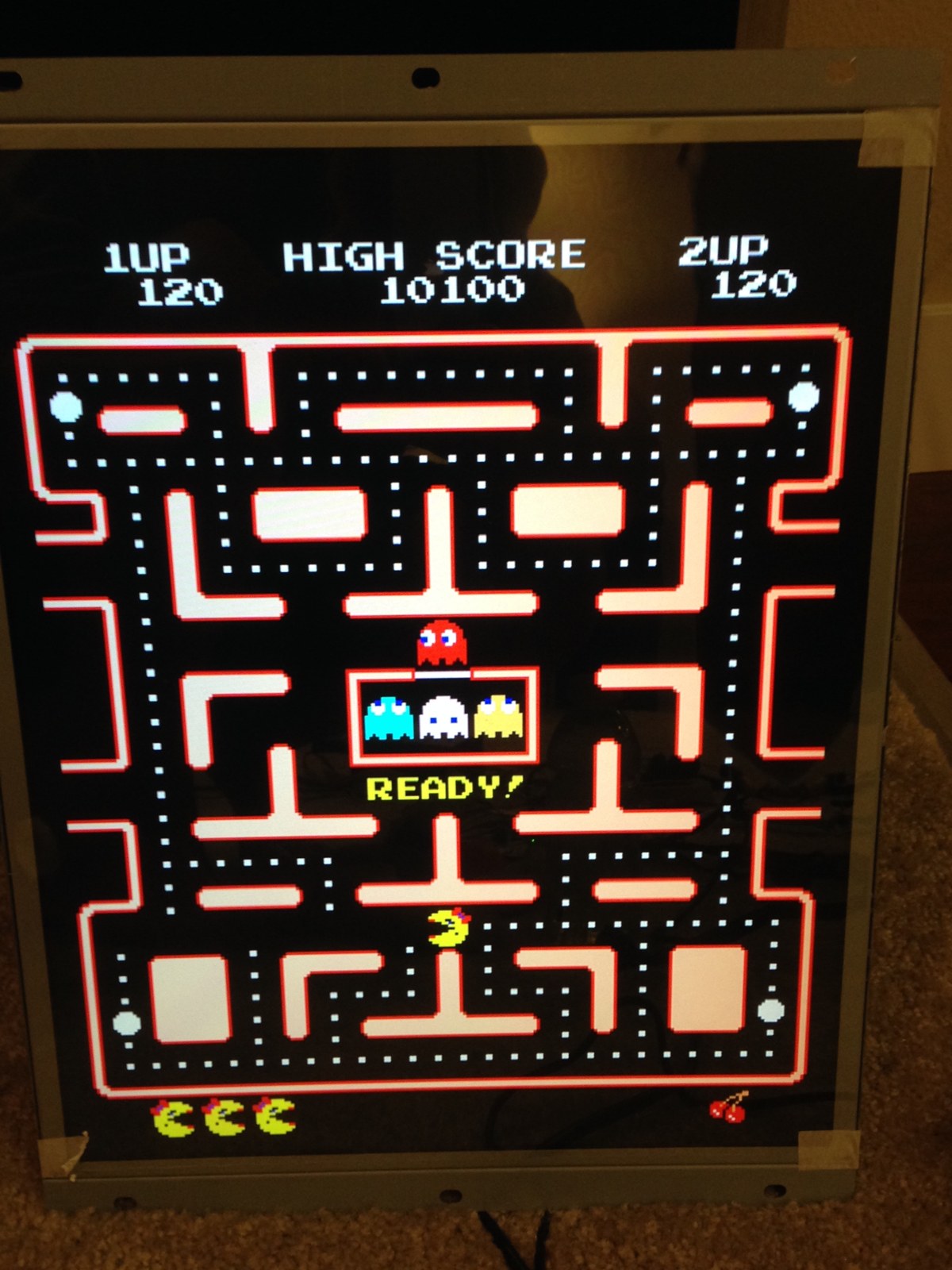
The harness had something like 40 wires, and I needed fewer than half of them. The wiring itself took about 3 hours. Apart from the sheer number of wires, there wasn’t much to any of it. It just took time.
Then the box
The cabinet is plywood. It’s a box with a control panel at each end and coin doors on the sides.
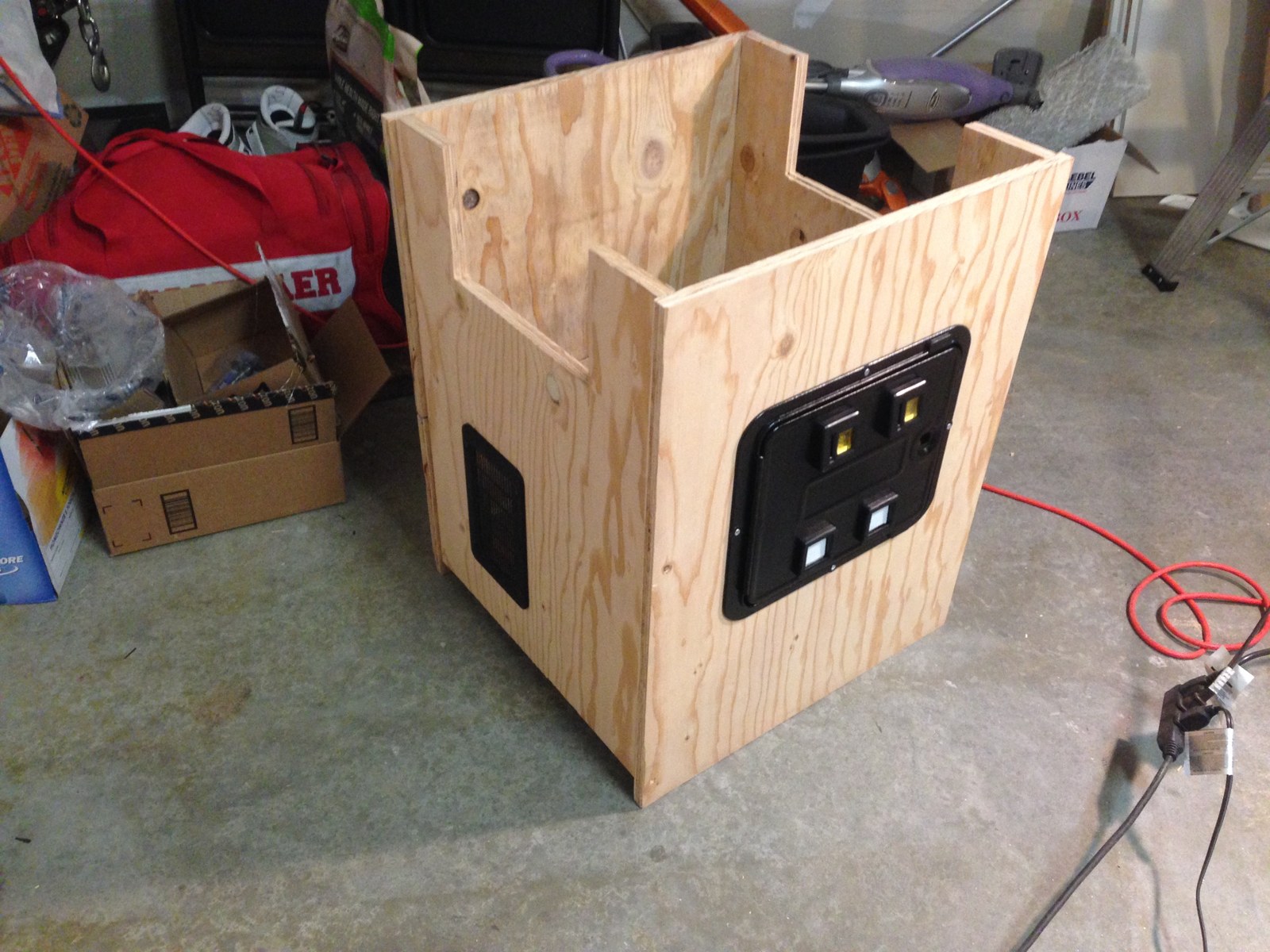
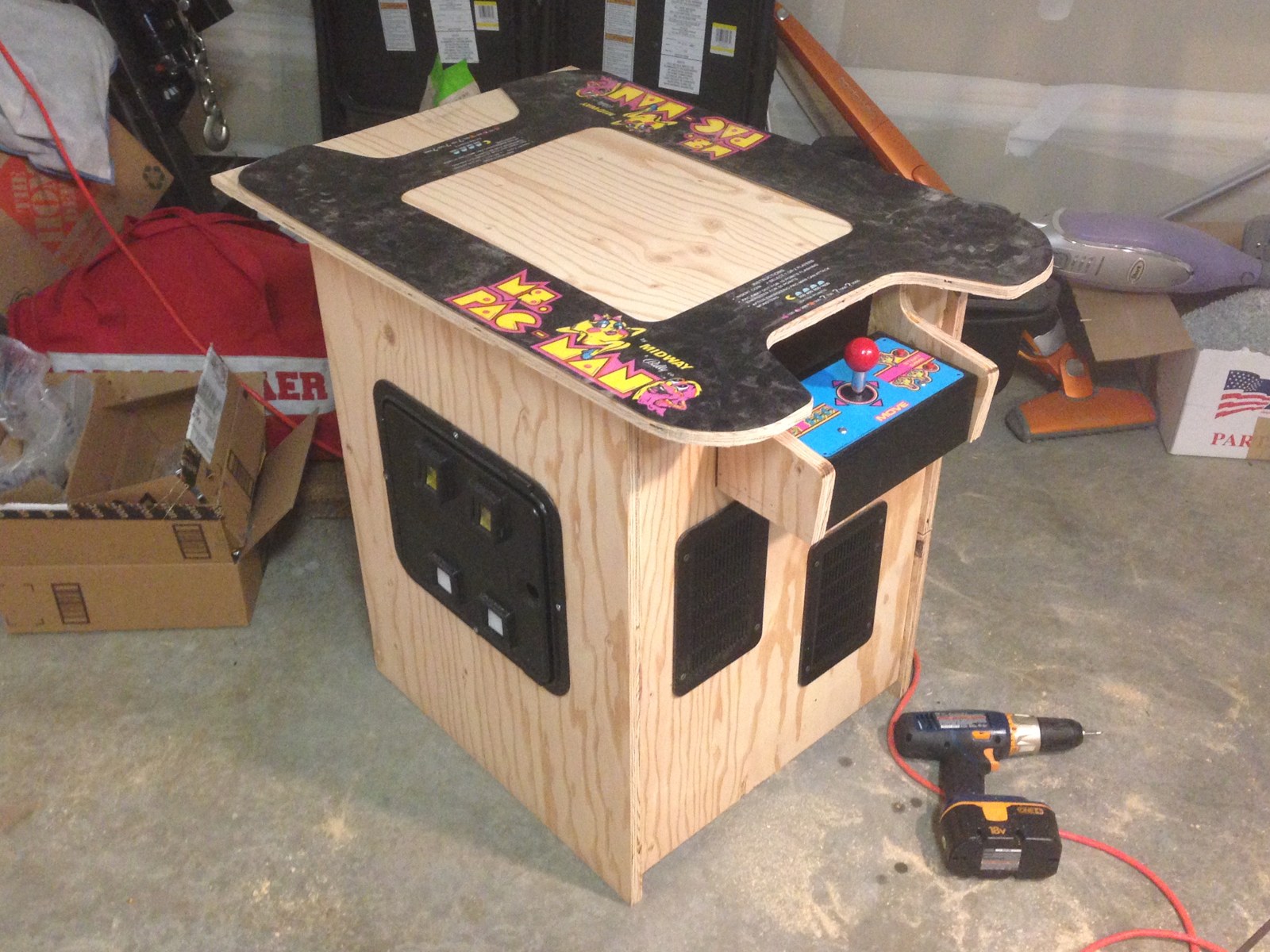
I stained it, but a real cabinet would have been a laminate applied to particle board.
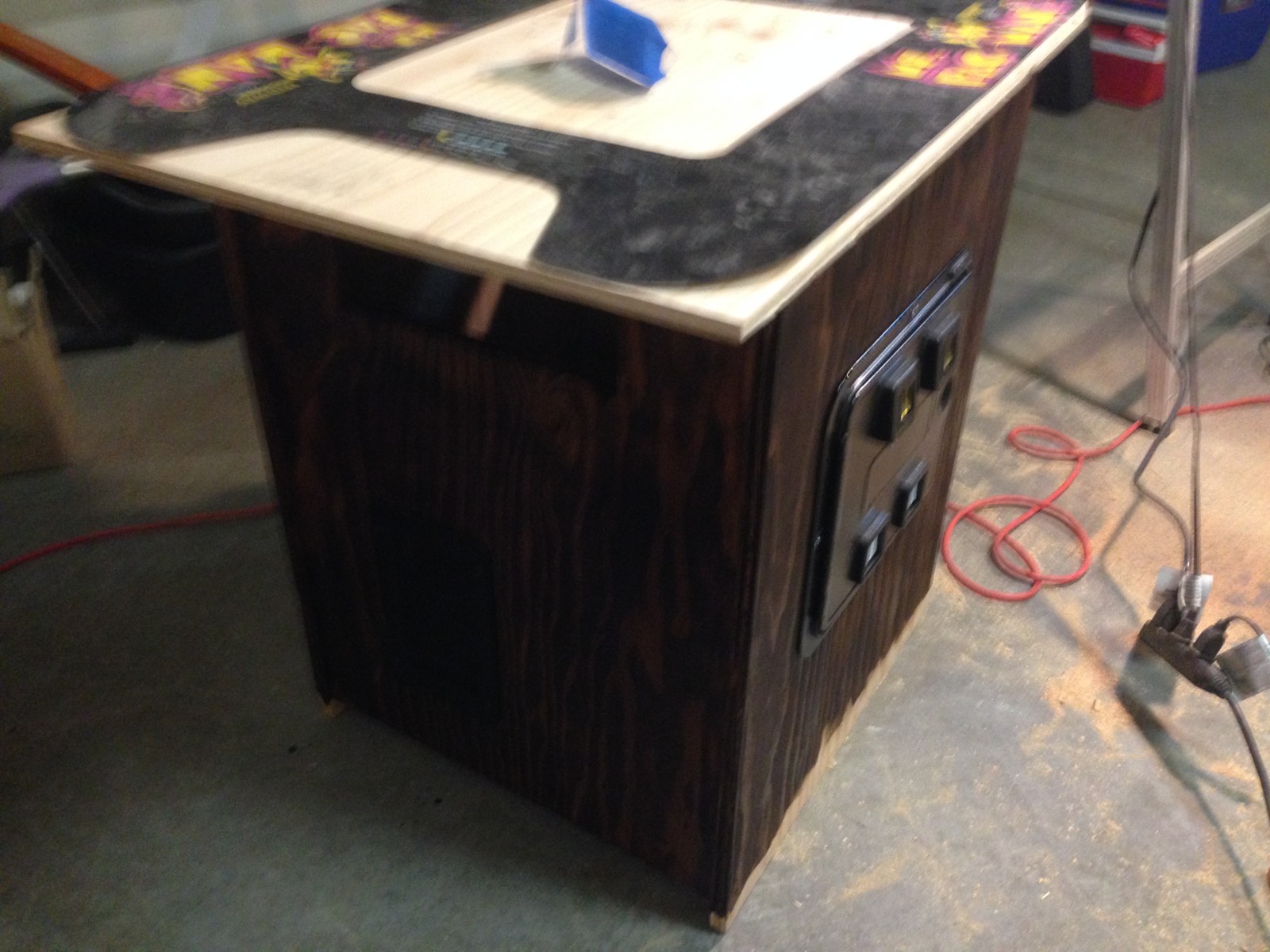
By June 20 it was getting played.
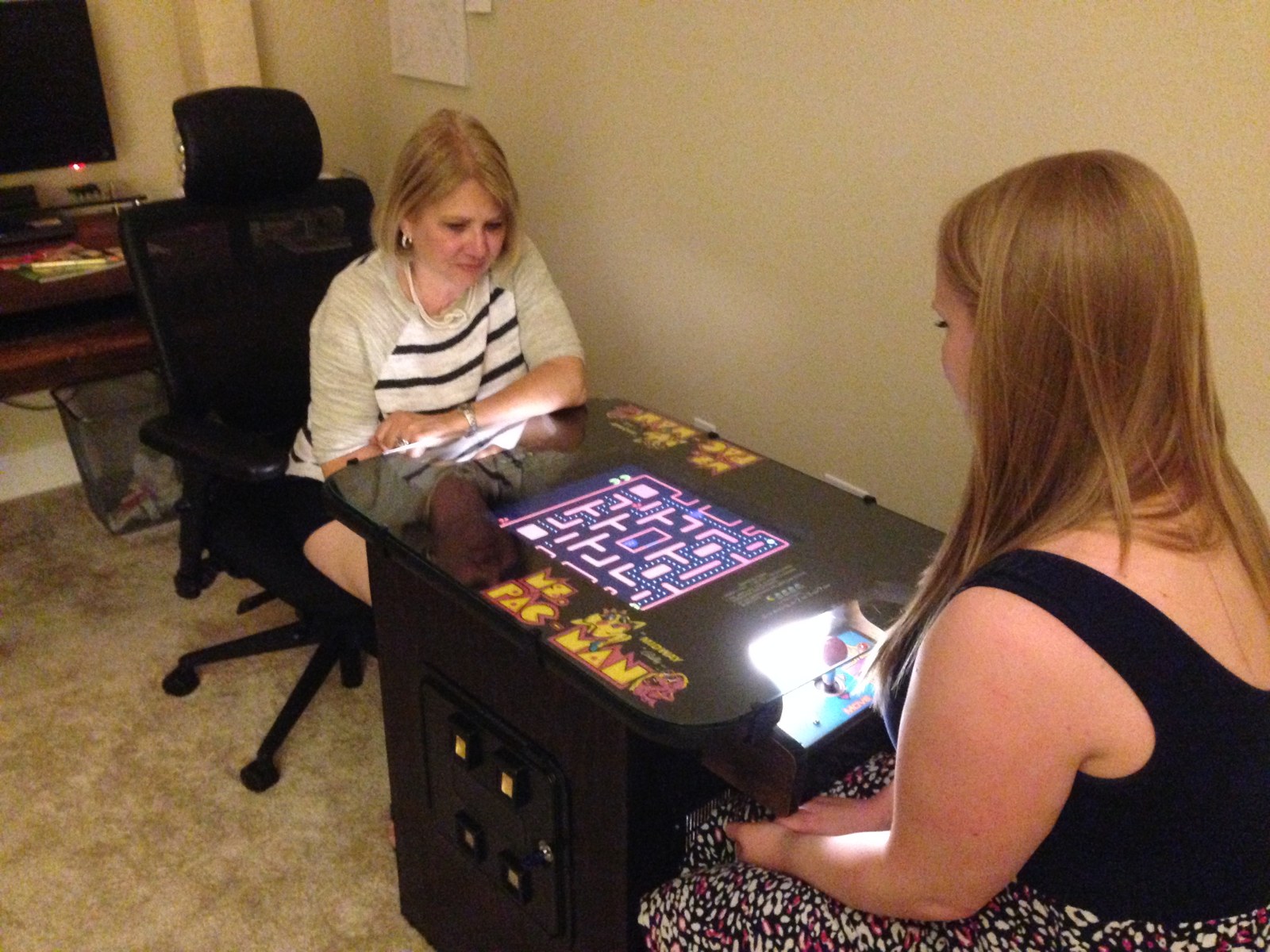
The top is glass, with the Ms. Pac-Man art under it.
If you want to build one
Five years later, in 2019, I drew it again in SketchUp. Same table, every part. Put together, it’s about 22 inches wide, 32 inches long and 29 inches tall.
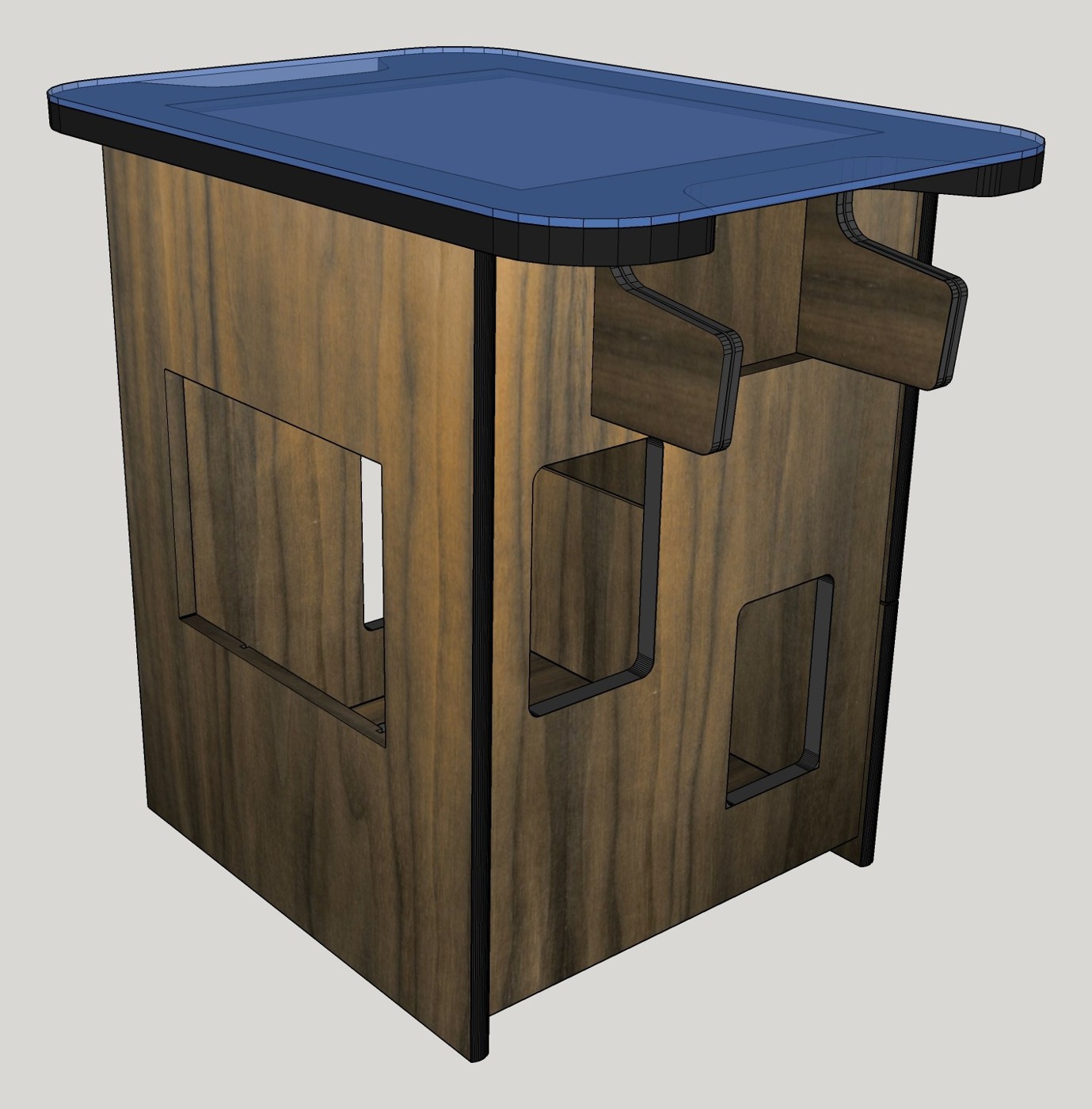
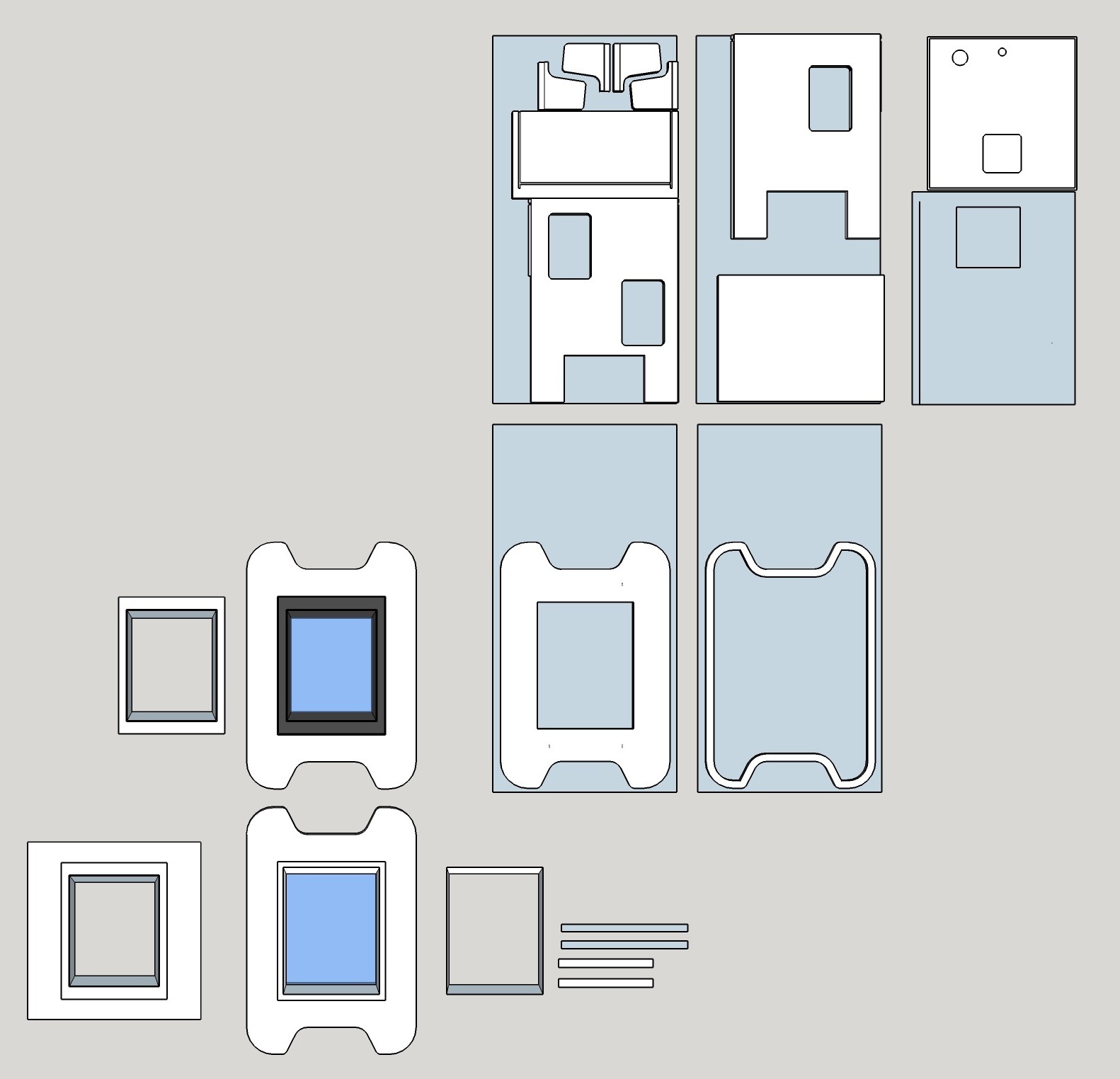
Every panel is laid out flat in the model, and I exported cut files from it for a Shaper Origin, a handheld CNC router. The top is 22¼ by 32¼ inches, with rounded corners and a notch at each end where the control panels go.
Who plays it now
My wife holds the high score. Our kids play it with their friends. Her friend has never seen it.