Wired wrong, and nobody tested it
A family member's brand-new house had a hidden HDMI cable die in the wall, and half the Ethernet drops were miswired from the start.
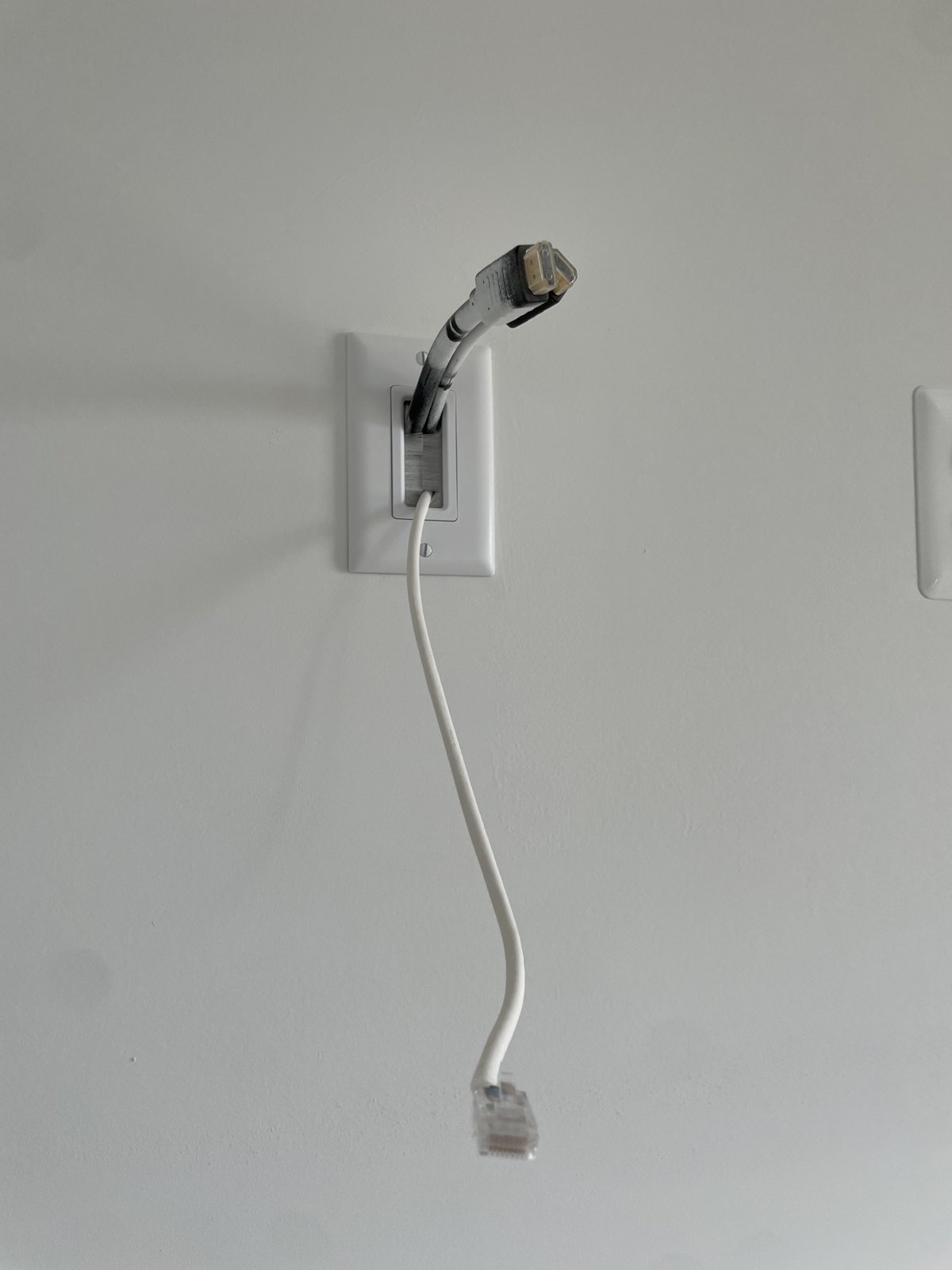
A family member of mine bought an expensive new-construction house in West Virginia from a large, well-known production builder. On paper, the low-voltage package was good. The house was wired for Cat6 throughout as part of the standard build, prewired for ceiling-mounted Wi-Fi access points based on a proposal I’d given them, and it even had 2 in-wall HDMI runs from over the fireplace down to the media cabinet, so a TV could be mounted above the fireplace without a visible cable in sight. On the surface, that’s a builder doing more than the bare minimum.
Then we actually went to mount the TV. The first HDMI cable was dead — a fault or a short, most likely a screw driven through it during the drywall phase. The second one worked, and I’ll give the builder credit for running a backup at all. But they didn’t run conduit the way we do at Bright Wire. That dead cable is stapled directly to the studs, buried in the wall, and the only way to replace it now is to cut the drywall open. My family member and their spouse had no interest in doing that to a brand-new house. Even with a good repair and the right compound, a patched section of drywall never quite disappears the way a single, untouched sheet does. So the dead cable just stays there, dead, forever.
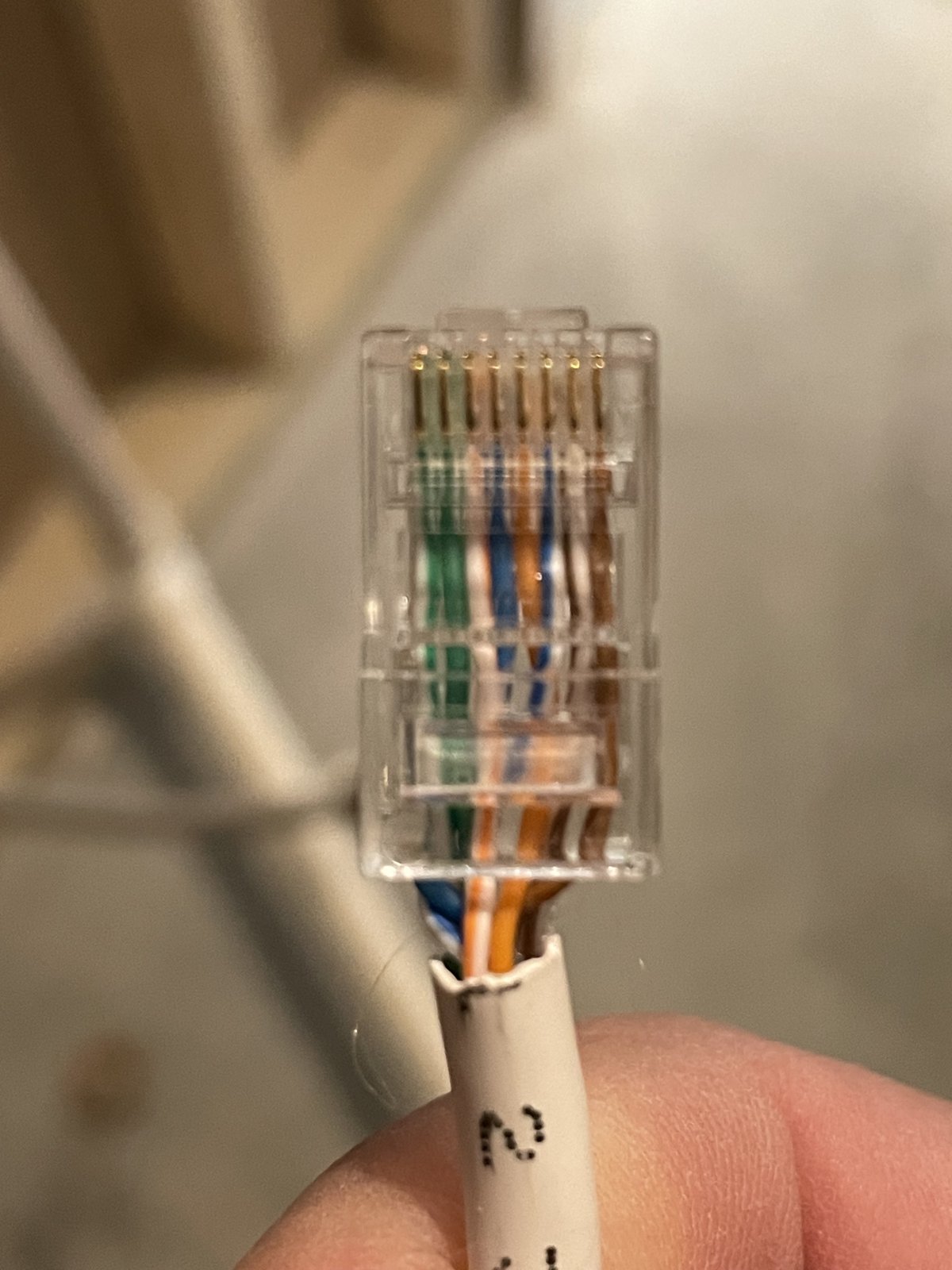
The HDMI issue turned out to be the smaller problem. When I tested the Ethernet drops, 5 out of 8 had at least one end with the internal pairs out of order — and not a simple, consistent mistake like flipping the A and B wiring standard on the RJ45 ends, which is at least a known, explainable error. This was just miswiring. My guess is that as someone was straightening the 8 individual conductors to feed them into the connector, a few of them crossed or flipped along the way, which is an easy mistake to make by hand. It’s also exactly the kind of mistake a tester catches in about 10 seconds — which is why we test every single run after termination, every time, on every job.
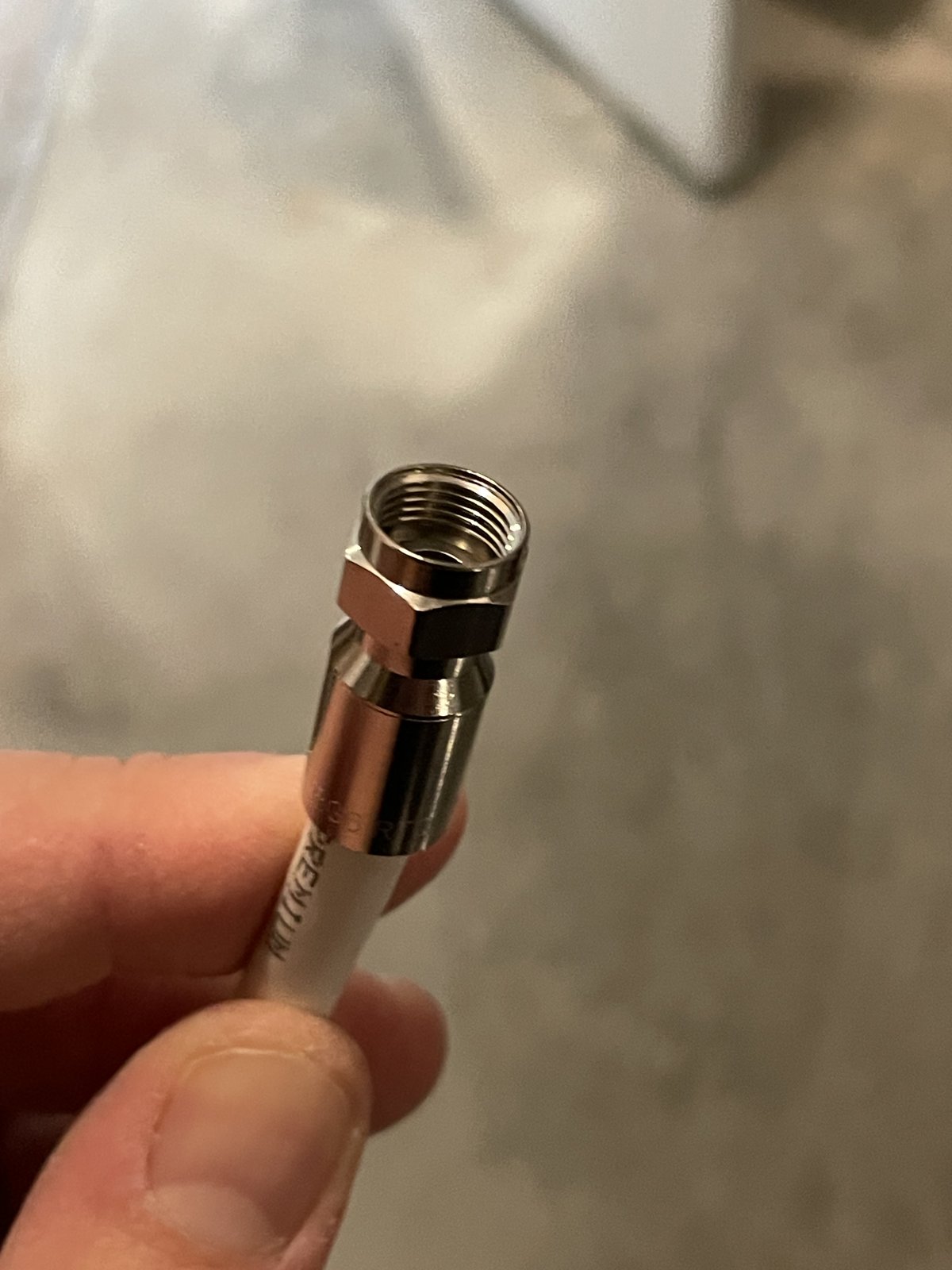
The coax had its own version of the same failure. One of the RG6 connectors had the copper core cut flush with the cable jacket instead of extended into the connector properly. From the outside, it looked completely normal — it threaded onto the jack fine, and nothing about it looked wrong. But nothing was actually connected except the shield. The signal wire itself never touched anything. It would have sat there looking fine, forever, unless someone happened to test it or try to actually use it.
None of these were exotic failures. A short in a cable, a few reversed conductors, a coax core that didn’t seat — every one of them is the kind of thing that a 5-minute test, done once, at the time of installation, would have caught. Instead, my family member is living with a permanently dead HDMI run buried in a wall they don’t want to open, and had to have half their Ethernet drops re-terminated in a house they just moved into. It’s a good reminder of something I already believed but don’t always say out loud: running the cable is the easy part. Testing it is the part that actually matters, and it’s also the part that’s easiest to skip when nobody’s checking your work.