The rep with the line card
The incentives looked aligned. They weren't, and I found out with a speaker that failed twice in the same house.
Early on, a manufacturer’s rep from a small regional distributor came through with a line card that looked, on paper, like exactly what I wanted. Expensive gear, dealer-direct only, not sold to consumers anywhere — which meant a client couldn’t take my quote and go brand-shop it online for a lower price. From where I was sitting, that felt like the incentives were finally aligned. He couldn’t get undercut by a big box store, so his advice should have been trustworthy.
It wasn’t. What I didn’t understand yet was that dealer-direct and consumer-protected doesn’t mean unbiased. He was recommending what paid him the best margin, not what was actually the best fit for the client sitting in front of me.
The clearest example was a speaker that failed twice, in the same house, in the same spot. It carried a lifetime warranty, and both times we used it. But after the second replacement, the manufacturer stopped covering it and started explaining it: the failures were the client’s fault. We were driving those speakers with the manufacturer’s own approved amplification. There was no version of that install that was going to satisfy them.
What we ended up doing was setting a software limit on the volume ceiling, so the client physically couldn’t push that speaker hard enough to kill it a third time. That is not a fix. It’s a fence around a product that couldn’t do what it was sold as doing.
The repair cost the client nothing. It cost us 2 truck rolls, and something harder to put a number on. I was the one who specced that speaker. The client didn’t lose any money on it — they lost some confidence in my recommendations, which is the actual price of taking a rep’s word for something.
Then there were the outdoor speakers. Very expensive, and genuinely excellent — they sounded great for exactly 1 season. Then water got into them, and that was the end of that.
The rule I took away, and still hold to now, is that I only sell what I can personally demo. Not what a spec sheet says, not what a rep’s line card implies through price alone, but gear I’ve actually sat down and listened to, or watched, in a real room. I’d learned that lesson once already, standing in a listening room watching my wife’s face change, years before I sold anything to anybody. The line card is what made me learn it a second time, with someone else’s living room as the classroom.
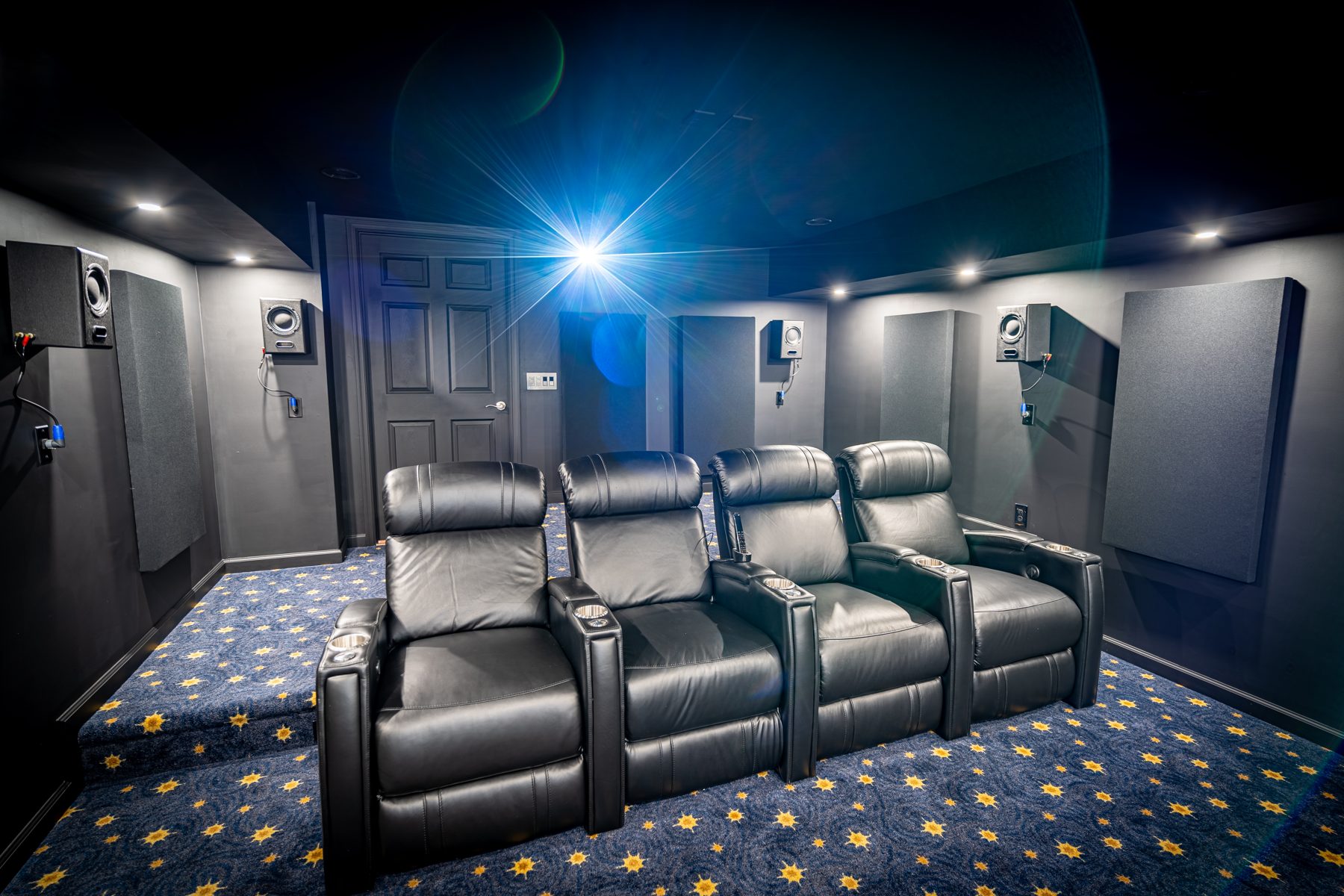
That rule has a physical form. There’s a demo theater I can sit a client down in, which means when I spec a theater it gets built around a fairly narrow band of gear — not because the catalog is small, but because that’s the gear I can let someone hear before they commit to it. A client doesn’t have to take a rep’s word for it. They don’t have to take mine either.
It’s also why I don’t chase every price jump a manufacturer wants to sell as meaningful. The jump from something like an Epson LS9000 to a QB1000 is real and dramatic. But going from an LS12000 to a QB1000 is a much smaller jump in practice than the price difference suggests, and I’d rather tell a client that plainly than let a bigger number on a spec sheet, or a better margin on my end, make the decision for them. Being transparent about where the returns actually diminish is worth more to the relationship than a few points of margin ever was.