The best Harmony replacement at CEDIA doesn't have a price tag
Josh built a remote with real, swappable buttons, then sold it where no Harmony customer will ever find a price.
Every year I go to CEDIA Expo, and every year there are tables full of universal remotes. Josh AI, URC, RTI, Control4. And every year, nobody fills the hole Logitech left. I wrote about Harmony going away in August: the $300 universal remote customer still exists, and nobody is selling that person a $300 universal remote.
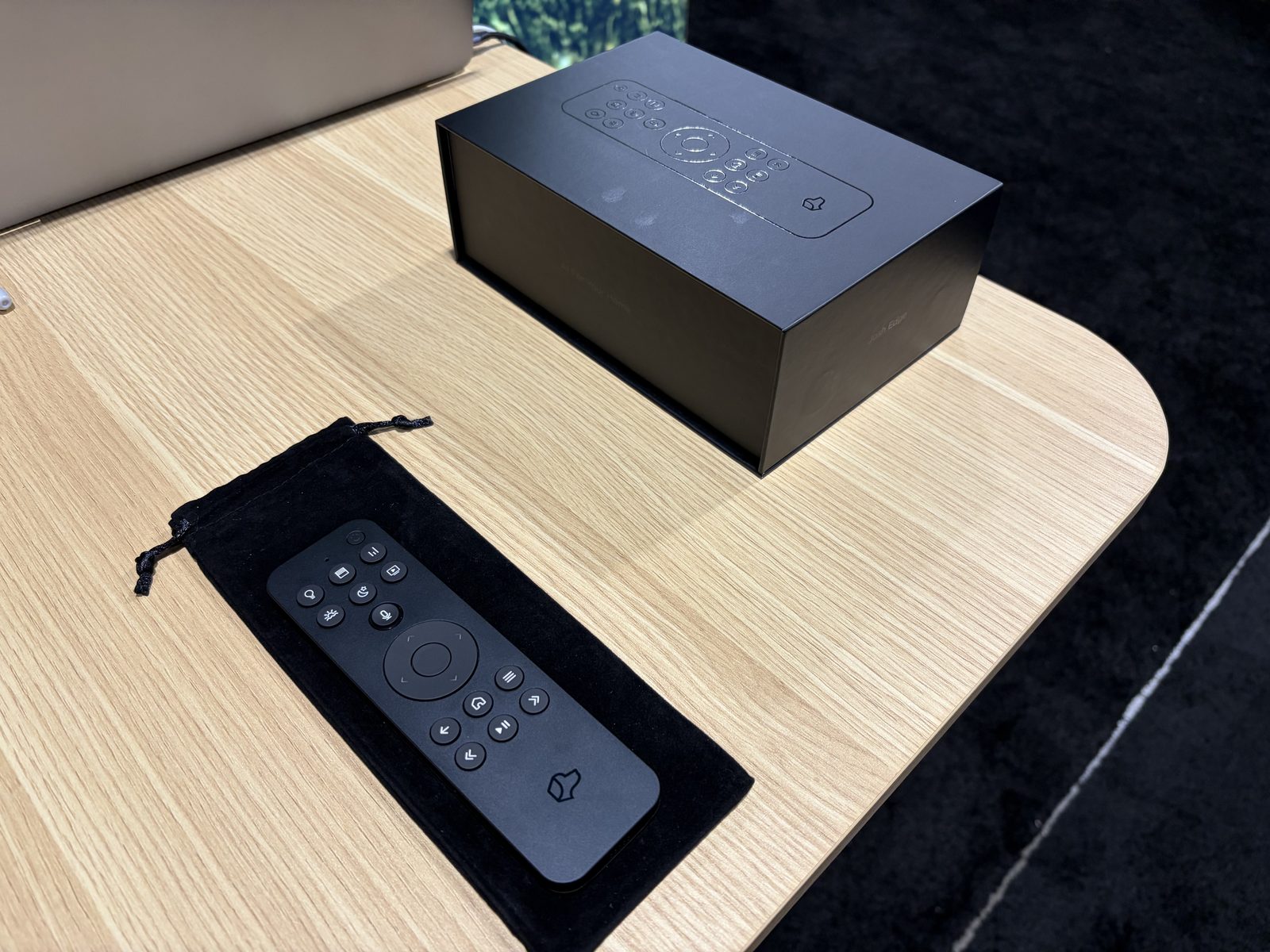
Josh has 3 remotes now. AVA builds 2 of them, the Home Remote and the Cinema Remote, and the Cinema Remote starts at $1,299. The third is Josh Edge, their own aluminum handheld, which started shipping in December. That’s the one I picked up.
The Edge is the entry piece in that lineup. It doesn’t feel like it. Josh’s CEO has pushed back on the idea that entry level means compromise, and after holding one, I get it. It’s machined aluminum, it runs for months on a charge, and there’s a real nav pad with play/pause and skip buttons right under your thumb.
What I actually came home thinking about was sitting on the table next to it.
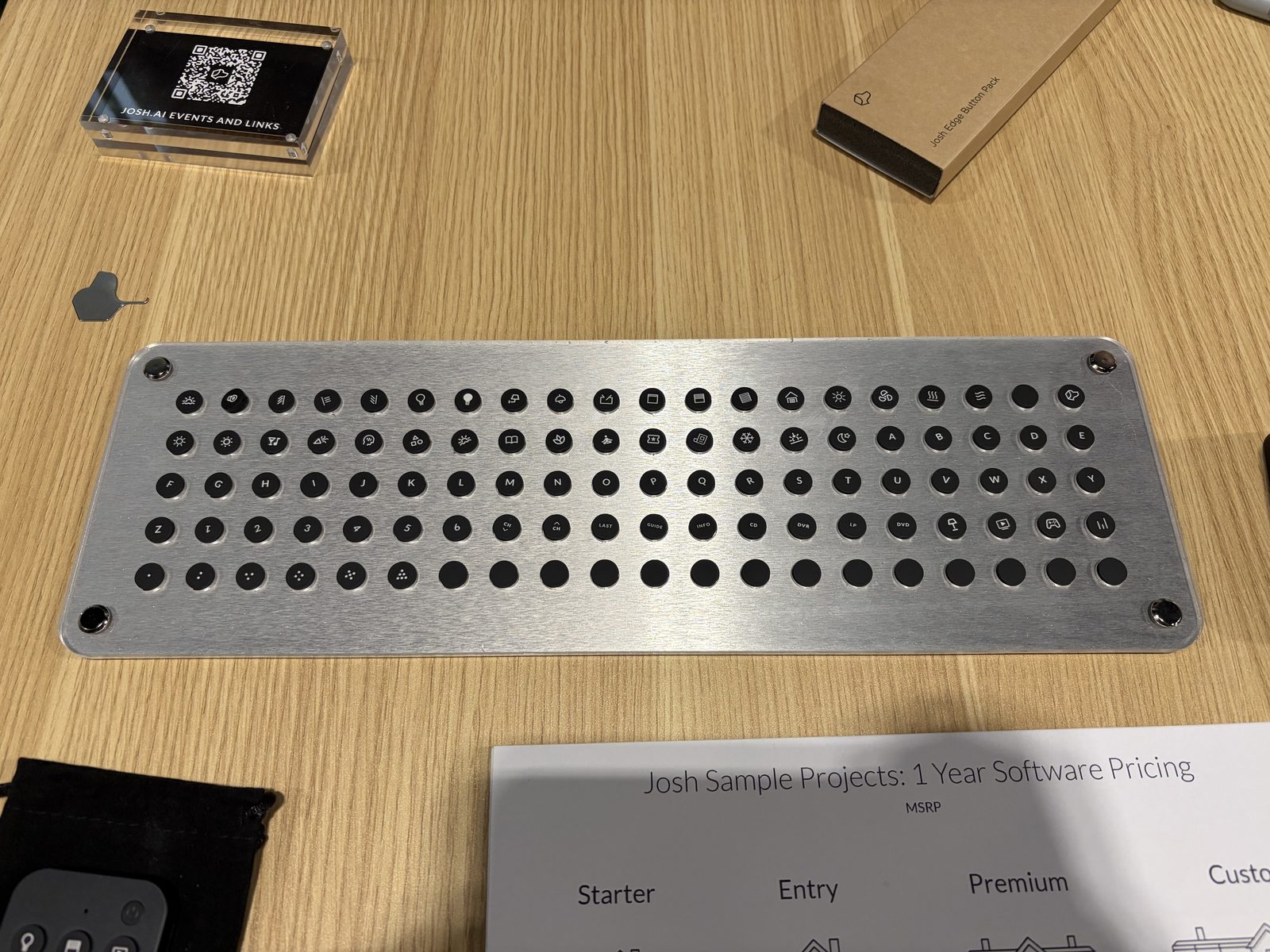
It’s an aluminum tray with about 100 button caps in it. Light bulbs, shades, a fan, heat, a snowflake, a moon. A through Z. The numbers 1 through 6. CH, LAST, GUIDE, INFO, CD, DVR, DVD. A game controller. A cocktail glass with music notes coming off it. Josh calls it the Edge Button Pack. The installer pops caps out of the remote and puts in the ones that match the room.
Almost everyone else’s answer to “the customer can’t remember what this button does” is a screen. The labels live in software, and you look down to find them. Josh went the other way. The label is printed on the button, it doesn’t change, and your thumb can find it with the lights off. That’s how Harmony thought about a remote, and it was the most encouraging thing I saw at the show.
Here’s where it falls apart for the Harmony customer: I can’t tell you what it costs. Josh doesn’t publish a price for the Edge. It’s sold only through authorized dealers, it needs a Josh hub, and it needs Josh’s software, which is licensed by the year in tiers sized to the job: Starter, Entry, Premium, Custom. I heard numbers at the booth. I’m not going to print a number I heard once on a show floor as if it were a price.
A Harmony sat on a store shelf with a price on it. You picked it up, looked, and decided. Here, every piece is a phone call, and the answer depends on who picks up. That’s a normal way to sell a system that needs a pro to set it up, and dealer margin is how good integrators stay in business. It also means nobody shopping for a Harmony replacement is ever going to find it.
URC and RTI have remotes closer to that price, and I’ve installed both. Neither one gives the homeowner the programming software. RTI’s lives in Integration Designer, which is dealer software, so a customer who wants a button moved waits for a service call. URC Total Control works the same way. URC is easier to live with once it’s set up, because it gives you a consistent interface instead of RTI’s blank canvas, but the owner still can’t change their own remote.
SofaBaton wasn’t at the show this year, so there wasn’t much DIY-friendly hardware to look at.
So the hole is still there. The $300 remote a homeowner can buy, set up, and change without calling anyone still doesn’t exist. Josh came closest to the right idea, real buttons with real labels, and put it where those people will never look. It’s part of why I’m still building my own.